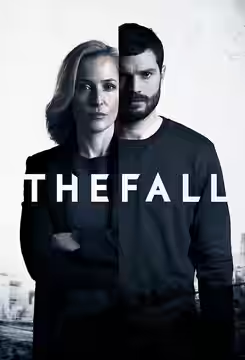
Allan Cubitt writes crime drama that spends as much time inside the killer's head as the detective's, and at his best, in The Fall's first series, the split is cold, patient and frightening. He is less good at knowing when to stop.
Fi1m perspective
Paul Spector reads his children a bedtime story, argues about the washing-up and goes to work, and then goes to his other work, and The Fall (2013) does not change its lighting for either. That is Allan Cubitt's method in one evening. He gives detective and killer half the hour each, tells us who did it before the police know there is a killer at all, and lets the two lives run side by side until we forget which one we are in. Ruairí O'Brien and David Grennan shoot Stella Gibson's hotel room and Spector's kitchen in the same blue-grey, and Steve Singleton's cutting does the rest.
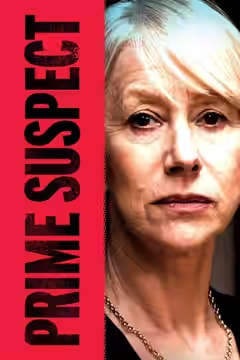
Cubitt came to television from the stage. He was a playwright from 1988 and BBC script work followed from 1990; his first large credit was the second Prime Suspect story in 1992, for a series that belonged to Lynda La Plante and Helen Mirren, and he was one of the several writers the programme passed to over its long run. Through the 1990s and 2000s he wrote adaptations, among them The Boys Are Back (2009), taken from a memoir and directed by Scott Hicks. Then came The Fall, which he created and wrote across three series from 2013 to 2016 and directed in its later stretch, and Death and Nightingales (2018), which he wrote and directed from Eugene McCabe's novel.
What he does well is build a person out of what they do rather than out of what happened to them. Gibson is right, self-contained and disliked for it, and Cubitt gives her almost no past to explain any of that; Gillian Anderson, whom he had in mind when he wrote the part, fills the space with stillness. Spector is handsome, quiet and dull, and the dullness is the point. We found the first series properly frightening, and the fright came from how ordinary it all looked: a notebook of chosen women in a family house, a man doing the school run with that in his bag.
He is worse at leaving. The Fall is cold and often frightening, and it also lingers on dead women too long, and both of those are true at once. Cubitt has said he knew the programme would disturb but did not want it to exploit, and for five episodes he held that line. The second series is slower and more interested in Spector's psychology than in whether anyone will catch him; the third tests the patience of anyone who came for a police story. He could not let his killer go, and the programme is two series longer than it should be because of it.
Watch the first five episodes of The Fall and stop there. Cubitt wrote one detective and one murderer that British crime television will keep coming back to; the trouble is that he kept coming back to them himself.