Anthony Harvey learned his trade in the cutting room and directed like an editor: he knew how long a face could hold a silence and when to cut away. The Lion in Winter is the proof, and the career never gave him another like it.
Fi1m perspective
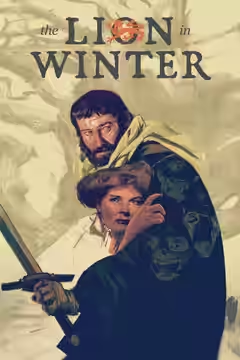
About halfway through The Lion in Winter (1968), Eleanor of Aquitaine has finished taking her husband apart, the door shuts behind him, and Katharine Hepburn sits down and simply stops. Harvey and his editor John Bloom hold on her face with nothing on the soundtrack. Most directors would have cut to Henry storming along a corridor. Harvey stays, and it moved us more than any of James Goldman's speeches, because it is the first time the film shows the wit costing something.
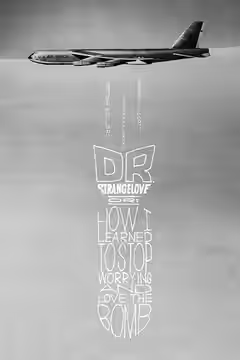
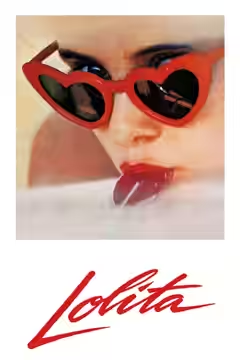
That patience came from a decade of cutting other people's films. He worked as an assistant editor for the Boulting brothers from the mid-1950s and went on to edit fifteen films, among them Lolita (1962) and Dr. Strangelove (1964) for Stanley Kubrick, and The Spy Who Came in from the Cold (1965). Strangelove is the one to look at. Peter Sellers plays three parts, and Harvey's timing stops them becoming three separate turns while keeping the danger present between the jokes. Ninety-five minutes is the right length, and it is the editor who has to know that.
He directed Dutchman (1966), a race-relations drama, and it impressed Peter O'Toole enough that The Lion in Winter followed. Goldman's play is a handful of people in a handful of rooms, talking, and Harvey's job was to stop it looking like a play that had wandered outdoors. He managed it mostly by refusing to make anything pretty, and then by trusting O'Toole and Hepburn to hold a room. They do. It is the film his reputation rests on, and it can bear the weight.
What followed was thinner, and not always by his choice. They Might Be Giants (1971) is the usual example, a quixotic comedy-drama whose tone was changed by the studio. He turned down Love Story and Cabaret, and the indecision after his early success cost him. He kept faith with Hepburn across four projects, including a television Glass Menagerie (1973), and he directed thirteen films and television films before walking away in 1994, after the studio interfered with This Can't Be Love. "I believe the writer is the most important element in film-making," he said in 1996, which explains both his best film and his quarrels.
If you are new to him, start with Strangelove and then The Lion in Winter, and watch what he does with a face after the talking stops. Editing first is a good way to become a director who gets out of the actors' way. On this evidence it is a harder habit to build a career on.
Biography
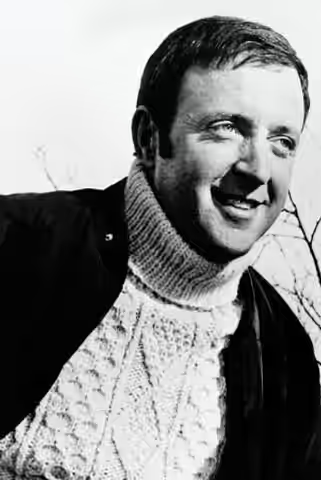
Anthony Harvey was a British film editor and director. He began his career as a child actor before working as an editor on fifteen films in the 1950s and 1960s, including Dr. Strangelove or: How I Learned to Stop Worrying and Love the Bomb (1964).
Harvey moved into directing in the mid-1960s. His second feature, The Lion in Winter (1968), brought him an Academy Award nomination for Best Director and a Directors Guild of America Award. He also directed They Might Be Giants (1971) and several later films and television productions.