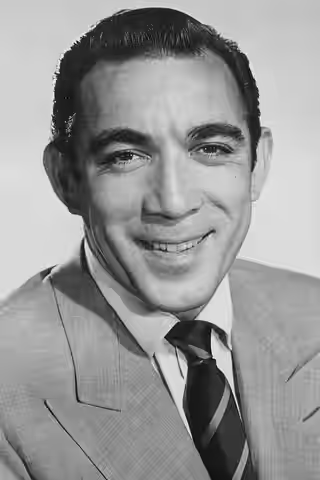
Anthony Quinn played big men plainly: appetite, temper and a body that filled the frame. In small parts he could turn a scene with a look; in later leads he played Zorba again and again.
Fi1m perspective
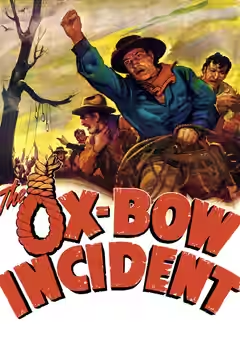
In The Ox-Bow Incident (1943) Anthony Quinn has almost nothing to do and makes it count. He is one of three men a posse has decided to hang, and while Dana Andrews argues, then reasons, then pleads, Quinn stands a little apart and looks at his captors as though they were the ones on trial. He has worked out that they can take everything from him except his contempt, so he keeps that. We found the look harder to sit with than the rope, because William A. Wellman has made the mob sound so reasonable that Quinn's silence is the only answer nobody in it can argue with. It is a small part in a short film and it shows most of what he was good at: he could stand still and let us read the man.
He had been in pictures since 1936, mostly in small roles, and Hollywood used him as its all-purpose foreigner, cast as whatever nationality the script needed and often as the heavy. The parts grew through the 1940s and the 1950s made him: Eufemio Zapata for Elia Kazan in 1952, the strongman Zampanò for Federico Fellini in La Strada (1954), Gauguin opposite Van Gogh in Lust for Life (1956). He worked for six decades and more than a hundred roles, and was still at it in 2001.
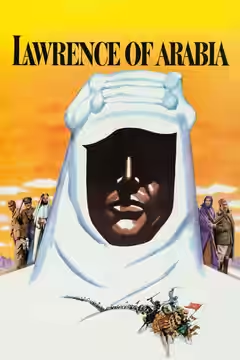
By Lawrence of Arabia (1962) he could walk into David Lean's desert and look as though he owned a share of it. Auda abu Tayi is loud, hungry and delighted with himself, and Quinn plays him as a man who enjoys being watched, which sets him against Peter O'Toole's flickering Lawrence and Omar Sharif's stillness. Alongside Alec Guinness and Sharif he makes the story feel populated by more than witnesses to Lawrence. Quinn's share of that work is appetite. He wants things, and he wants them in front of people, and a film that long needs someone who does.
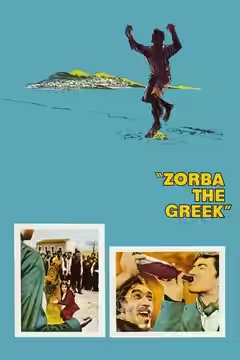
Then came Zorba the Greek (1964), for Michael Cacoyannis, and the part took over the actor. Zorba insists that life is for living and for living loudly, and Quinn played him so completely that much of what followed was Zorba under other names. He said as much himself, that he had become more like Zorba from the day he played him. The complaint about the later work is overstatement, and it is fair. The man in Ox-Bow kept something back; the later Quinn kept less and less, and vitality stopped being something the character had and became something the audience was asked to admire.
Start with the small parts. His minutes in The Ox-Bow Incident are the quietest in the film and his in Lawrence are among the loudest, and it is plainly the same actor in both, taking exactly as much room as the scene allows him. The leads came later, and so did the habit of taking a little more.
Biography
Anthony Quinn was a Mexican-American actor. Born in Chihuahua, Mexico, he appeared in numerous films and television series over a career spanning more than six decades.
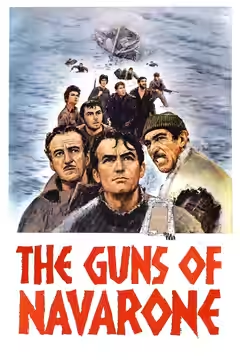
He is known for roles including Auda abu Tayi in Lawrence of Arabia (1962), Zampanò in La Strada (1954), Col. Andrea Stavros in The Guns of Navarone (1961), and Hamza in The Message (1976). Quinn received Academy Awards for Best Supporting Actor for Viva Zapata! (1952) and Lust for Life (1956).