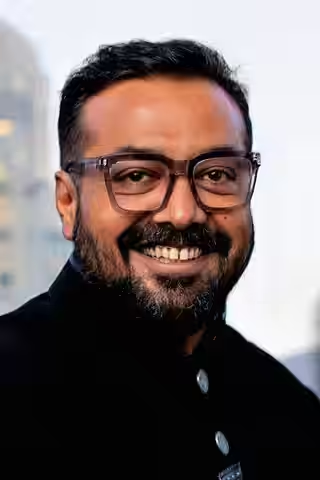
Anurag Kashyap makes crime films in which family life keeps interrupting the men's claims to importance. We value the humour and the attention to ordinary dealings, even when his crowded plotting needs more breathing room.
Fi1m perspective
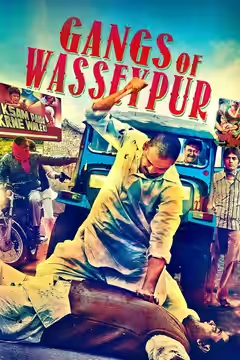
In Gangs of Wasseypur – Part 1 (2012), the men nurse their grudges while family exchanges keep cutting them down to size. Kashyap gives these dealings as much attention as the gunfire, and this is where his crime cinema is most rewarding. We were horrified by how casually the shooting happens, staged as another task to fit into the day. The humour makes the people recognisable without making their violence easier to bear.
His interest in crime predates his directing: he co-wrote Satya (1998) with Ram Gopal Varma. Early work such as Black Friday (2007) drew on real events, while Dev.D (2009) brought Devdas into a contemporary setting. The latter was a breakthrough in a career that repeatedly puts troubled men into recognisable Indian surroundings. The two-part Gangs of Wasseypur (2012) follows coal-mafia feuds across decades, allowing family grudges to accumulate.
The detail in the first part owes much to collaborators who make the town convincing beyond its usefulness as a setting for violence. Production designer Wasiq Khan gives Wasseypur the feel of a working place, and cinematographer Rajeev Ravi's gliding camera keeps the action legible. Kashyap and co-writer Zeishan Quadri let people talk about more than their allegiances. Their earthy dialogue is funny because these people have other things to attend to besides the feud.
The difficulty is remembering who everyone is. Shweta Venkat Mathew's editing carries the first part across generations without much slack, but names and grievances sometimes arrive faster than we can place them. Kashyap and Quadri need to give certain introductions longer; the actors are left to establish people whose connections remain unclear. Its crowded plotting is a real flaw in a film we otherwise recommend warmly.
Later work takes that interest in fallible people into the kidnapping thriller Ugly (2014), while co-directing the series Sacred Games (2018) extends his work into television. The danger is that repeated violence stops telling us anything more about the people committing it. The humour in Wasseypur matters because it gives its criminals a life beyond the next confrontation. Start with its first part, and give the introductions your full attention.
Biography
Anurag Kashyap is an Indian film director, screenwriter, producer and actor. Born on 10 September 1972 in Gorakhpur, Uttar Pradesh, he trained at Hansraj College, Delhi.
Kashyap received his first major credit as co-writer on Ram Gopal Varma's Satya (1998). His directorial debut Paanch was completed but never received a theatrical release owing to censorship. He gained wider recognition with Black Friday (2007) and Dev.D (2009).
His two-part crime saga Gangs of Wasseypur (2012), on which he is credited as director, story writer, screenwriter and producer, screened at Cannes and became a cult film. In 2013 the French government awarded him the Ordre des Arts et des Lettres. He co-founded production companies Anurag Kashyap Films and Phantom Films.