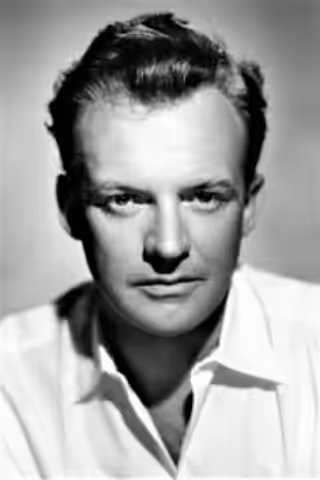
Arthur Kennedy played the man in the second chair, the friend or the drunk in the shack, and made him more frightening or more decent than the lead. He was rarely the point of a film and often the best thing in it.
Fi1m perspective
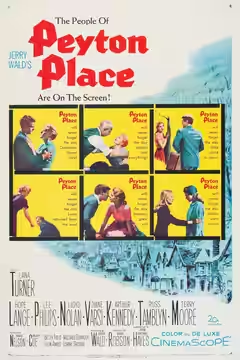
The shack scene in Peyton Place (1957) lasts a few minutes. The lamp is low, Betty Field's Nellie is pretending not to see, and Arthur Kennedy's Lucas Cross comes home drunk, wounded and dangerous. Mark Robson shoots it plainly, without music, and Kennedy does nothing an actor would call big. It frightened us, and the pastel town around it had done nothing to warn us. He is on screen for perhaps twenty minutes of a 157-minute film and he is the only person in it who is exactly as bad as the town thinks. That is what he did, in film after film: come into a picture that had settled and unsettle it.
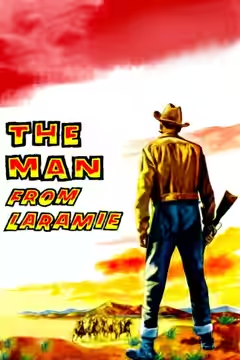
He came from the stage, with a Broadway debut in 1937, and his first film was City for Conquest (1940) opposite James Cagney. For the next twenty years he was the reliable second man, and the reliability is the point. He was in the original casts of four Arthur Miller plays, among them Death of a Salesman (1949), where he was the first Biff Loman, and Miller's people, honest and ordinary and cornered, were the ones he played best on film too. Champion (1949) and Bright Victory (1951) made his name. The Westerns with Anthony Mann and James Stewart, Bend of the River (1952) and The Man from Laramie (1955), gave him the part he was made for: the villain you understand, played with enough warmth that the turn hurts.
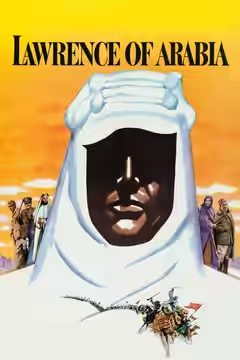
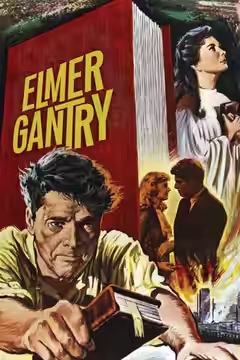
By Elmer Gantry (1960) and Lawrence of Arabia (1962) he was a man studios sent for when a part needed to be right rather than noticed. He joined Lean's film late, replacing another actor, and our review of it, which we scored 90, does not single him out at all. We do not think that is a slight. Jackson Bentley is a job, done well, in a film built around Peter O'Toole, and Kennedy understood better than most that some parts are there to hold a film up, not to be looked at.
The criticism that sticks is a fair one. After 1960 the good directors mostly stopped calling, and the films got smaller without his parts getting bigger. He was a supporting actor for the whole of his career, and the second half of it is a long list of pictures nobody now watches for him. He stopped around 1979 and came back once, for Signs of Life (1989), the year before he died.
Start with the twenty minutes in Peyton Place, since it is the performance we have written about and it shows what he could do to a room. Then the two Mann Westerns. He said once that the only security an actor has is his own talent, and that it must be nurtured. His was, and most of it went into films built around somebody else.
Biography
Arthur Kennedy (1914–1990) was an American stage and film actor. He trained at Carnegie Mellon University and made his screen debut in City for Conquest (1940).
He appeared in numerous films, including High Sierra (1941), Bend of the River (1952), The Man from Laramie (1955), Elmer Gantry (1960), Lawrence of Arabia (1962) as Jackson Bentley, and Fantastic Voyage (1966). On stage, he originated the role of Biff Loman in Arthur Miller's Death of a Salesman and won the 1949 Tony Award for Best Featured Actor in a Play.
Kennedy received five Academy Award nominations and won the Golden Globe Award for Best Supporting Actor for Trial (1955).