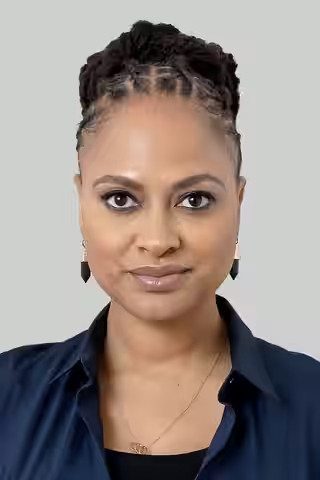
Ava DuVernay is at her best when she lets people disagree and gives everyone time to be heard. Selma makes that patience gripping, though her writing sometimes supplies a prepared speech where a conversation would do.
Fi1m perspective
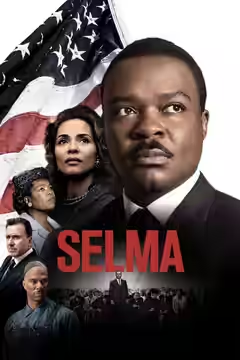
When David Oyelowo speaks in Selma (2014), DuVernay keeps us attentive to the people listening. Their doubts and demands complicate King’s authority, and she gives them time to register. We were moved by his quiet exchanges with Carmen Ejogo’s Coretta Scott King, because her reserve makes his confidence seem harder to sustain. DuVernay lets Ejogo keep her own judgement, rather than making her a source of reassurance about the man at the centre.
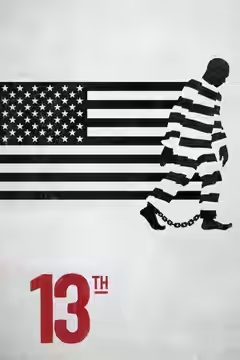
Middle of Nowhere (2012) had already made Black family life central to her work before Selma brought her wider attention. That concern with families continued in the television ensemble of Queen Sugar (2016–2022). Her subsequent work moved between forms, from the documentary 13th (2016) to the studio film A Wrinkle in Time (2018). With Origin (2023), adapting Isabel Wilkerson’s Caste through personal and historical stories, she again put individual lives alongside a much larger subject.
Her work with cinematographer Bradford Young gives that attention to people a practical expression. His rich, naturalistic lighting keeps varied dark skin tones visible in low light, without making the illumination feel conspicuous. In Selma, DuVernay shows a similar care in handling the actors, keeping Oyelowo’s public confidence from settling what everyone else feels. She lets discussions develop at their own pace, so that familiar history still contains decisions whose difficulty we can understand.
Some exchanges in Paul Webb and DuVernay’s screenplay sound prepared for delivery rather than worked out between people. Tom Wilkinson’s Lyndon B. Johnson is too conveniently obstructive, while Tim Roth’s George Wallace has little room to become more than an opponent. The writing gives these men less to do than the activists, whose disagreements are more complicated and more rewarding. That weakens a film otherwise so good at showing how difficult persuasion can be. Start with Selma, and watch Ejogo as closely as Oyelowo.
Biography
Ava DuVernay is an American director and writer. Born on 24 August 1972 in Long Beach, California, she founded the independent distribution company ARRAY in 2011. Her feature directorial debut was I Will Follow (2010).
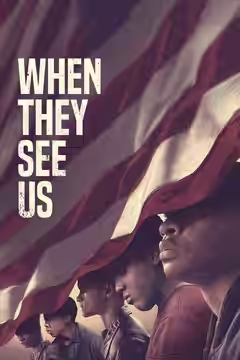
She directed and wrote Selma (2014), becoming the first African-American woman nominated for a Golden Globe Award for Best Director. Her other credits include the documentary 13th (2016), A Wrinkle in Time (2018) and the limited series When They See Us (2019). She has received two Primetime Emmy Awards, two BAFTA Awards and two NAACP Image Awards, and was nominated for an Academy Award.