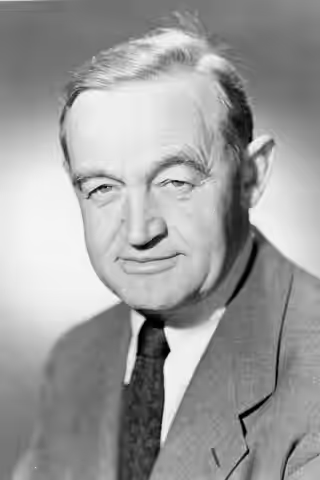
A talker who never quite stops, in a brogue Hollywood ordered by the yard. Fitzgerald is best in John Ford's crowded ships and villages, one voice among many; after Going My Way the studios wanted it louder, and he knew the cost.
Fi1m perspective
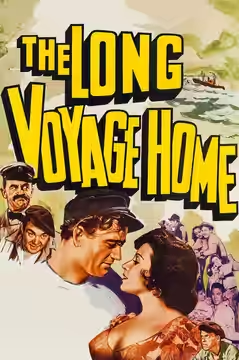
In The Long Voyage Home (1940) the crew of a tramp steamer fill their bunks and Barry Fitzgerald's Cocky has an opinion on everything. It is not a large part. He is one of a dozen men aboard, alongside Thomas Mitchell, Ward Bond and John Qualen, and the film is not about him. But he is the one you listen for, and that is the Fitzgerald habit: the talk that runs on past the point, the brogue that makes a complaint sound like a tune. He once said that "a look, a twist of the neck or the way a person walks can tell more than whole pages of dialogue", an odd thing for a man who talked so much on screen to believe, and also the key to him. The words are the noise. Watch the neck.
He came to acting late and sideways. He was a Dublin civil servant from 1909 who acted part-time at the Abbey Theatre from 1915, and did not turn professional until 1929, after the Seán O'Casey premieres. Hitchcock filmed him in Juno and the Paycock (1930), his stage part carried over as The Orator. John Ford brought him to Hollywood for The Plough and the Stars (1936), and he stayed for the better part of a quarter of a century, a character actor through the 1940s and 1950s, going home to Dublin in 1959.
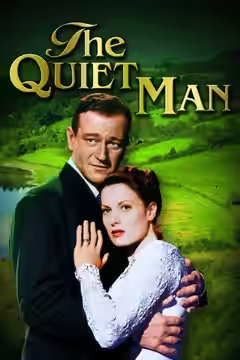
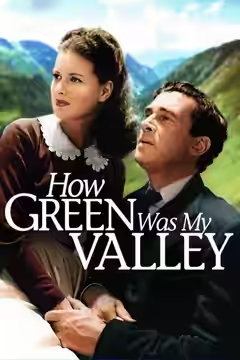
Ford is the collaborator who matters. They made five films together, and Ford understood that Fitzgerald worked best in a crowd: the ship in The Long Voyage Home, the mining village of How Green Was My Valley (1941), where he is Cyfartha, and The Quiet Man (1952), where he plays the matchmaker Michaleen Oge Flynn alongside his brother Arthur Shields. Put him among other talkers and he becomes the sharpest one. Watching The Long Voyage Home, with Gregg Toland's light doing all the serious work and the story going maudlin around it, we found ourselves waiting for Cocky to open his mouth, because his grumbling was the one thing on that ship that felt like company.
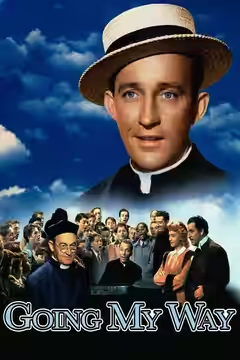
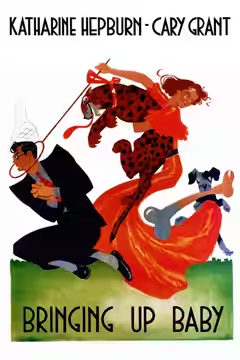
Going My Way (1944) gave him the largest part of his career, the old priest Father Fitzgibbon, and it is the performance most people mean when they say his name: comedy and pathos in the one rumpled figure. It also fixed him. After it the studios wanted the stage Irishman, broader each time, and he regretted it, which tells you he knew the difference between a character and a turn. Look at Bringing Up Baby (1938), where he hardly registers as Mr Gogarty. Hawks's farce has no room for a chatterer and does not make any.
Start with the Ford films. There the brogue is one voice in a chorus and the twist of the neck does the work he said it should. Save the priest for afterwards, once you know what he could do when the whole film was not leaning on him.
Biography
Barry Fitzgerald, born William Joseph Shields, was an Irish actor. He began his career with Dublin's Abbey Theatre in the 1910s and 1920s, taking the stage name Barry Fitzgerald. His film debut came in Alfred Hitchcock's Juno and the Paycock (1930).
He moved to Hollywood in 1936 for John Ford's The Plough and the Stars and appeared in numerous films thereafter. Notable roles include Mr. Gogarty in Bringing Up Baby (1938), Cyfartha in How Green Was My Valley (1941), Father Fitzgibbon in Going My Way (1944), and Michaleen Oge Flynn in The Quiet Man (1952). He was the brother of actor Arthur Shields.
For Going My Way (1944), Fitzgerald received Academy Award nominations for both Best Actor and Best Supporting Actor for the same role; he won the latter. He died in Dublin in 1961.