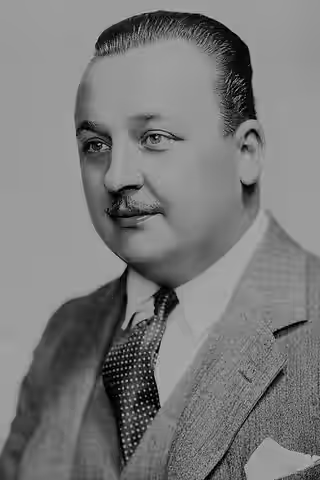
Bert Roach was the round, cheerful man at the edge of the frame, the friend, the drunk, the roommate who talks too much, for nearly forty years. He was rarely given anything to carry, and in The Crowd he showed exactly what he could do with a little.
Fi1m perspective
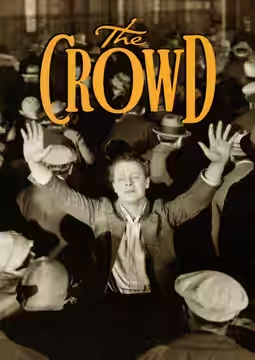
Bert Roach is the friend who introduced them. In The Crowd (1928) he brings Johnny and Mary together and then gets on with his own life, broad and cheerful and doing rather well for himself, and the film's quiet cruelty is that Johnny never quite notices. It is about as much as Roach was ever given, and he does it without asking for more. Round-faced, moustached, pleased with the world, he is the man who has already had a good evening while the leads are still deciding whether to have one.
That was the trade. He came from the New York musical-comedy stage, entered films in 1914 with a bit in Mack Sennett's Fatty's Magic Pants, and spent the silent years as a utility comedian, in Alice Howell shorts among much else, before Vidor gave him the part people remember. Sound did not stop him, which it did to a good many. He worked for Al Christie and Hal Roach (no relation), turned up as Bert Tozer in John Ford's Arrowsmith (1931), where we found him amiable and not much else, as Paul the comic-relief roommate in Murders in the Rue Morgue (1932), as Emile in Mamoulian's Love Me Tonight (1932) and as Freddie Duane in San Francisco (1936). From the mid-thirties the parts shrank to bartenders, drunks, stagehands and party guests, often uncredited, and his last screen work is a drunk in the 1951 Show Boat.
Drunks were the speciality, along with frightened men. Roach could do the stagger and the sway and the sudden alarm, and the studios kept a place for him because those things needed doing and he did them quickly. The complaint against him, when anyone bothered to make one, was that the bits ran long; Murders in the Rue Morgue has been faulted for letting his comedy get in the way of the horror, and we would not argue hard with that. Comic relief is a job done best when nobody remembers who did it, and Roach was sometimes a shade too visible.
But the one part that counted, he judged exactly. We will admit that in The Crowd we caught ourselves faintly resenting Bert, on Johnny's behalf, for his ease and his money and his luck, and then realised the resentment was the point: Roach plays prosperity without a trace of smugness, so the unfairness sits with the man watching rather than the man watched. Vidor, Eleanor Boardman and James Murray get the credit for that film, rightly. Roach is the measure they are working against, the ordinary success that Johnny's ordinary life keeps failing to match.
Nobody will build an evening round Bert Roach. But see The Crowd, which you should anyway, and then keep an eye out for him; he is in more films than you think, usually holding a glass.
Biography
Bert Roach (also credited as Egbert Roach) was an American film actor. He appeared in over 300 films between 1914 and 1951, often in supporting or uncredited roles.
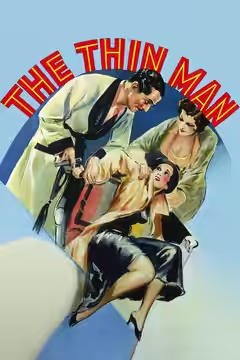
Born in Washington, D.C., Roach began his career on the New York stage before making his screen debut in the short Fatty's Magic Pants (1914). He had notable parts in silent films including The Crowd (1928) and transitioned to sound pictures with roles such as Bert Tozer in Arrowsmith (1931), Paul in Murders in the Rue Morgue (1932), and various characters in the Thin Man series.
Roach continued working into the early 1950s in films including Duel in the Sun (1946) and Show Boat (1951). He died in Los Angeles, California.