Bertrand Bonello shuts people in a building, gives them a tune they cannot shake, and waits for the routines to form. When it works, as in the Paris stretches of The Beast, few French directors are as patient; when it does not, the patience reads as chill.
Fi1m perspective
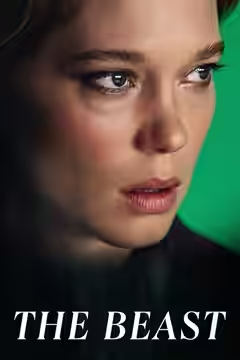
A Roy Orbison song keeps coming back in The Beast (2024), in a Paris ballroom in 1910, a glass house in Los Angeles in 2014 and a laboratory in 2044, and nobody remarks on it. That is how Bonello works. He plants an object or a phrase in one era, lets it surface in another, and trusts us to notice. He played the piano from the age of five and still writes his own scores, which may be why his films are built on repetition and return rather than on plot.
He began in the late 1990s with Something Organic (1998), The Pornographer (2001) and Tiresia (2003), films that got him filed with the New French Extremity, and from On War (2008) he has produced his own work through his company, My New Picture. Then came the films people mean when they say his name: House of Tolerance (2011), daily life inside a Belle Époque brothel; Saint Laurent (2014), a biography that declined to explain its subject; Nocturama (2016), young radicals in a Paris department store who cannot say what they believe. After that came Zombi Child (2019), Coma (2022) and The Beast, where he took on more plot than usual and was, we thought, less sure what to do with it.
The habit that runs through all of them is the sealed room. A brothel, a department store, a glass house, a Paris handed to machines: Bonello likes to lock people in somewhere and watch what they do. Josée Deshaies, who has shot four of his films, makes those rooms feel lived in; in The Beast she refuses to light the wide black windows of the Los Angeles house at night. We were frightened by that stretch, more than we wanted to be, and noticed we had stopped breathing; we were also aware that for forty minutes Bonello was shooting a stalker thriller the way everyone shoots one. The fault critics keep finding is a coolness towards the people on screen, which some saw in Nocturama and read as irony. We saw it in The Beast too, and it is why the film runs half an hour long.
Léa Seydoux, three films in, is the actor who reaches through it. Bonello has called fear "one of the most beautiful feelings", and Seydoux is how he shows us, making the same fear read differently in a corset, a swimming pool and a machine. Anita Roth's cutting lets the eras answer one another, a glance in the ballroom met by a face in the laboratory. He has said The Beast is the end of something for him, and in 2026 he began filming a project about the canonisation of Pope John Paul II. Whatever that is, we would bet on a locked building, a repeated tune and a woman who has noticed something the others have not.
Biography
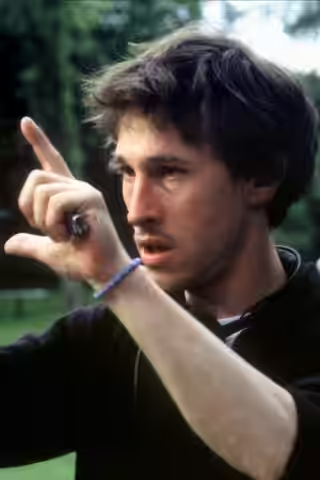
Bertrand Bonello is a French film director, screenwriter, producer and composer. Born on 11 September 1968 in Nice, he has a background in classical music and composes scores for many of his films.
His feature films include The Pornographer (2001), House of Tolerance (2011), Saint Laurent (2014), Nocturama (2016), Zombi Child (2019) and The Beast (2023), on which he is also credited as writer, director, producer and composer. Several of his films have screened in competition at the Cannes Film Festival.