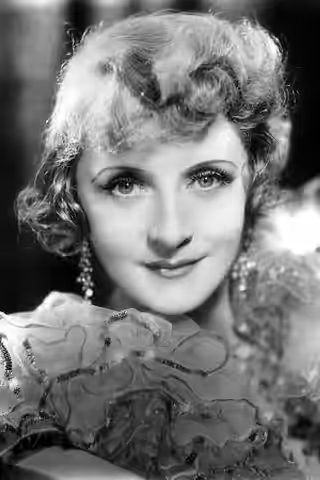
Billie Burke made a career of women who flutter: the dithering wives and mothers of light comedy, and one good witch in a bubble. It was a narrow trade, and within it she was precise, funny and, when a director let her, quietly authoritative.
Fi1m perspective
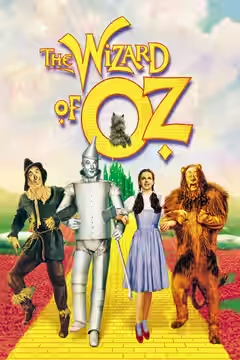
Glinda arrives in a bubble and does not hurry. That is the whole of Billie Burke's method, and it is worth watching for. Her women twitter and dither, and the joke in most of her comedies is that they never quite reach the point; Glinda is the same voice put to a different use, so that the fussing becomes a kind of grace. Our review of The Wizard of Oz (1939) said she offers a gentler authority than Margaret Hamilton's Wicked Witch, and that is right, but gentle is not the same as slight. Watching it again, we were surprised by how much of the film's early safety is hers: a child who has just been through a tornado is told, at a pace that refuses to be alarmed, that she is among friends, and we believed it.
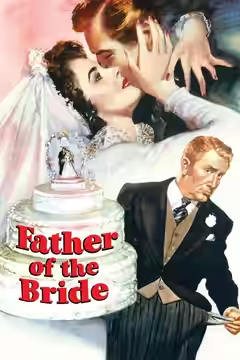
She was a stage star long before she was a screen one, in London from 1903 and on Broadway from 1907, and she went into silent films in 1916 as one of the highest-paid actresses of the day. Then she left, and came back after the crash of 1929 to find the leading roles gone. What she found instead was the character part, and Dinner at Eight (1933) showed how well it fitted. From then on she was the wife, the mother, the aunt: Clara Topper in Hal Roach's Topper (1937) and its sequels, prim and put upon while Cary Grant and Constance Bennett haunt the house; Emily Kilbourne in Merrily We Live (1938); Doris Dunstan in Vincente Minnelli's Father of the Bride (1950) and its sequel. She was still working in 1960, for John Ford, in Sergeant Rutledge.
The trade was narrow and she knew it. She traced her bird-witted ladies to a stage part, and she said of her career, "I generally did light, gay things. I often had cute plays but never a fine one." The limitation shows. In Father of the Bride she flutters and frets as the groom's mother, and the part asks nothing more of her; Minnelli has Spencer Tracy to worry about and Joan Bennett to steady him, and Burke is furniture, expensive and well placed. Yet the dithering is exact. She times the fluster so that the sense arrives a beat after the words, which is why a stock figure in her hands is funny rather than merely silly, and why the same instrument could be slowed down and made kind for Oz.
See The Wizard of Oz for Glinda, then Dinner at Eight for the woman underneath the wand. By her own account she never had a fine one. She had Glinda, and for most people that has done just as well.
Biography
Billie Burke was an American actress known for her work on Broadway and in film. Born Mary William Ethelbert Appleton Burke, she made her stage debut in 1903 and became a Broadway star before entering silent films in the 1910s.
She is best known to modern audiences for playing Glinda the Good Witch of the North in The Wizard of Oz (1939). Earlier in her screen career she appeared in Dinner at Eight (1933) and the Topper series, and she received an Academy Award nomination for Best Supporting Actress for Merrily We Live (1938).
Burke was married to Broadway producer Florenz Ziegfeld Jr. from 1914 until his death in 1932. Her later film roles included Father of the Bride (1950) and Sergeant Rutledge (1960).