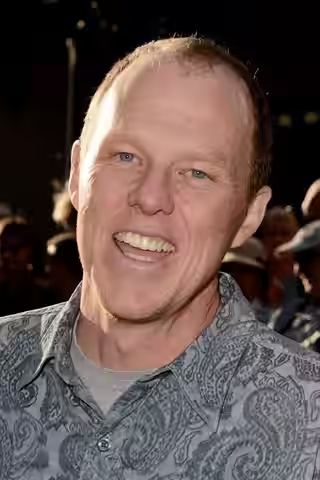
Brian Helgeland writes clearly: he can take a crowded novel and turn out a screenplay you follow without feeling led. He also has a habit of adding a speech or a voiceover to explain what the scene has already shown.
Fi1m perspective
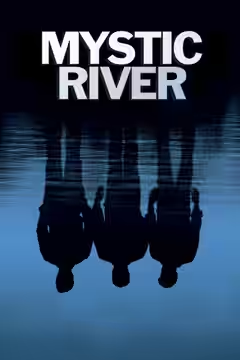
There is a speech in Mystic River (2003) that says, in words, what the film has spent its running time showing us. It is the one false note in a screenplay that otherwise trusts its actors, and it tells you most of what you need to know about Brian Helgeland. He is a writer who makes complicated stories clear, and who cannot always stop once they are.
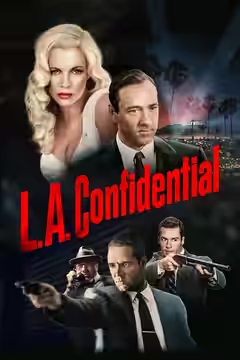
At his best the clarity is the whole point. L.A. Confidential (1997), written with Curtis Hanson from James Ellroy's novel, has a plot in which police, organised crime and the press are all pressed up against one another, and it never once loses us; the script asks us to follow the people as closely as the case, and we can. Mystic River, his adaptation of Dennis Lehane's novel for Clint Eastwood, does something similar with three boyhood friends and a childhood crime, and the explaining is kept to that one speech. These are the two films that made his name and they remain the ones to see.
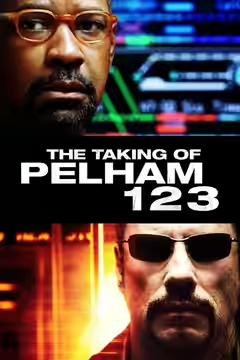
The career around them is untidier. He began in horror, with A Nightmare on Elm Street 4: The Dream Master and 976-EVIL in 1988, moved up to studio work for Richard Donner on Assassins (1995) and Conspiracy Theory (1997), and after L.A. Confidential started directing his own scripts: Payback (1999), A Knight's Tale (2001), The Order (2003), 42 (2013), Legend (2015), Finestkind (2023). In between he kept writing for others, including Man on Fire (2004) and The Taking of Pelham 123 (2009) for Tony Scott. He has said he is not much interested in the crime itself: "What makes a crime story stand out is the dynamic between the characters." The good films bear that out.
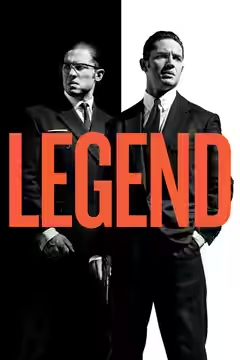
The weak ones show what happens when nobody is editing him. Legend is the case we know best. Tom Hardy plays both Kray twins and gives Helgeland the material for a hard film about two brothers; Helgeland, directing as well as writing, hands the story to Frances's voiceover, which tells us what we have just watched, and spends his attention on the suits and the clubs. By the last half hour we were tired of watching men be hit in bars, and then irritated, because a point of view was needed and only narration turned up. Even L.A. Confidential has a version of the problem: Kim Basinger's Lynn Bracken is given less room to contradict herself than any of the men.
So the recommendation is a slightly odd one for a writer. See Helgeland's work when a director with a will of his own stands between him and the screen, Hanson or Eastwood, and go warily when his name appears twice in the credits. He can be relied on for a story you can follow. Whether it knows what it thinks is another matter.
Biography
Brian Thomas Helgeland is an American screenwriter, director and producer. Born on 17 January 1961 in Providence, Rhode Island, he was raised in New Bedford, Massachusetts, and studied at the University of Massachusetts Dartmouth and Loyola Marymount University.
Helgeland wrote the screenplay for L.A. Confidential (1997) with Curtis Hanson, for which he received an Academy Award for Best Adapted Screenplay. He has also written screenplays for Mystic River (2003), Man on Fire (2004) and A Knight's Tale (2001), the last of which he directed. His other directing credits include Payback (1999), 42 (2013) and Legend (2015).