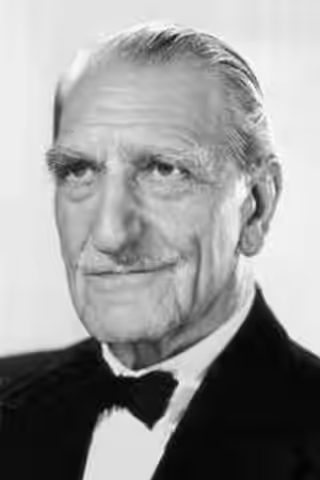
For nearly twenty years he was the Englishman Hollywood kept for when a scene needed a spine: tall, upright, eyebrows first, certain that the correct thing and the obvious thing are the same. He played one man, well enough that nobody asked for another.
Fi1m perspective
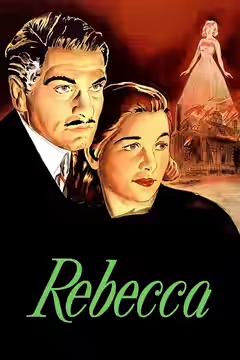
He comes in, he is very tall, the eyebrows arrive a moment before the rest of him, and the scene has a chairman. That is the C. Aubrey Smith performance, and he gave it for the best part of two decades: colonels, generals, earls, businessmen, ministers of the cloth and ministers of government, all standing straight and all sure of the right thing. In Rebecca (1940) he is Colonel Julyan, the one person in the story who cannot be flattered or frightened. He barely raises his voice. He does not have to.
He came to acting late. A first-class cricketer, he captained England in a single Test in 1889 before going on the London stage in 1895, and the bearing never left him. Films came in Britain in 1915 and Hollywood in the mid-1920s, but it was sound, from 1930, that made him: the voice was the point. From then until his death in 1948 the work was steady and the parts were near-identical. The Earl of Dorincourt in Little Lord Fauntleroy (1936), Colonel Zapt in The Prisoner of Zenda (1937), General Burroughs in The Four Feathers (1939), General Sir John Mandrake in And Then There Were None (1945). Of Zenda he told Raymond Massey, "My dear Ray, in my time I have played every part in The Prisoner of Zenda except Princess Flavia." He was not complaining.
What he did well was weight. Put him at the end of a table and the table had an end. The Dorincourt part, a crusty old man who thaws, is the one people cite because it lets him move an inch, and an inch from Smith registers like a yard from anyone else. The reservation, and it is the only one anybody makes, is that after the mid-1930s the studios stopped offering him anything but the officer and the peer, so we never found out what else was in there.
Watching Rebecca again, we noticed that we relaxed the moment he appeared, and that this is exactly what Hitchcock wants from him. The film has spent an hour and more making everyone at Manderley a liar or a wreck, and here at last is a man who is plainly neither. Our review found the closing stretch less precise than what came before it; he is not the reason.
He is not an actor you seek out so much as one you keep meeting, and are glad to. If you want to know what Britain looked like to Hollywood between the wars, he is where you start, and he is more or less where you stop.
Biography
C. Aubrey Smith was an English actor of stage and screen. He appeared in numerous Hollywood films from the beginning of the sound era, often in roles as officers or gentlemen.
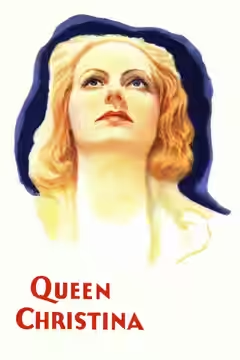
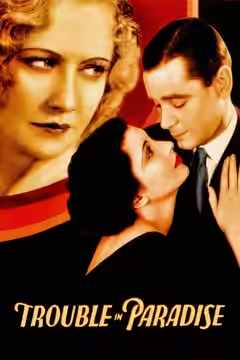
His credits include Trouble in Paradise (1932), Tarzan the Ape Man (1932), Queen Christina (1934), Rebecca (1940) as Colonel Julyan, Dr. Jekyll and Mr. Hyde (1941), And Then There Were None (1945) as John Mandrake, and Little Women (1949) as Mr. Laurence. He was made a Commander of the Order of the British Empire in 1938 and knighted in 1944.