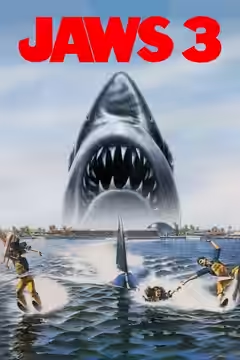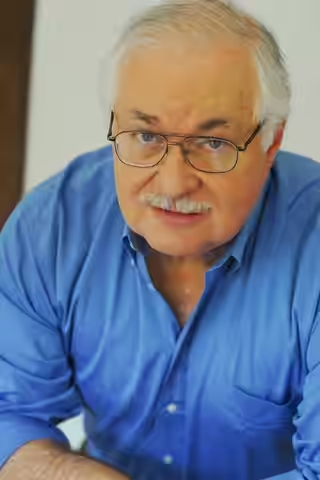
Carl Gottlieb is a writer who keeps turning up in his own films, in small parts. His real work is in other people's mouths: the jokes and the ordinary talk that make Jaws and The Jerk feel lived in.
Fi1m perspective
In Jaws (1975) he is Meadows, a small part in a film full of them. In The Jerk (1979) he is Iron Balls McGinty, on screen for a moment and then gone. Neither part would fill a paragraph in anyone's account of him. Both films would be thinner without him, because on each he was also holding a pen: brought in to rewrite Jaws after being cast in it, and one of three names on the script of The Jerk.
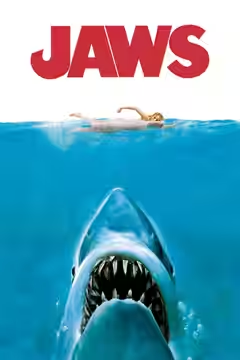
That is the pattern of the career. Gottlieb came up through live improvisation with The Committee in San Francisco and through television variety writing, and it shows in how his films are built: short scenes, a room full of people, a gag that lands on the person least expecting it. Steven Spielberg hired him as an actor on Jaws and then set him to work on the script with Peter Benchley, adding jokes and the everyday talk that makes a town feel inhabited. Our review put it simply: the people matter as much as the shark. Gottlieb's memo to Spielberg had already said what the film was for: "If we do our jobs right, people will feel about going in the ocean the way they felt like taking a shower after Psycho."
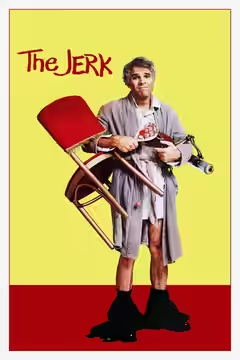
The Jerk, written with Steve Martin and Michael Elias and directed by Carl Reiner, is the same method turned into comedy. The script puts its best material first, and the porch scene, with Navin clapping on the wrong beat while the family sings, is a joke that improves the longer Reiner holds it. At the petrol station, M. Emmet Walsh picks a name from the telephone book and opens fire on the oil cans behind Navin's head, and we laughed until it hurt. What did it was the writing's refusal to let Navin notice he was the target; the scene only works if he believes the quarrel is with the cans. The film sags once Navin gets rich, a fault the writers share with everyone else, but the best jokes have outlasted most of the decade's serious films.
The limits are the limits of a gag man. In Jaws the arguments about money and authority are settled too easily; somebody is behaving foolishly, and that is that. Given a whole film to direct, as on Caveman (1981), a slapstick prehistoric comedy with Ringo Starr and an invented language, he made something most critics found mild beside the sharper comedies of the moment, and his segments of Amazon Women on the Moon (1987), alongside Joe Dante, were as uneven as sketch anthologies tend to be. He went back to the shark for Jaws 2 (1978), with Howard Sackler, under the same rewrite-in-a-hurry conditions.
So a writer, then, who happens to be in the frame. Watch the two films we have reviewed and notice how much of the talk you remember afterwards. Then try to remember his face.
Biography
Carl Gottlieb (born 18 March 1938) is an American screenwriter, actor and comedian. He studied drama at Syracuse University and began his career writing comedy for television, contributing to series including The Smothers Brothers Comedy Hour, The Bob Newhart Show and The Odd Couple.
Gottlieb is best known for co-writing the screenplay for Jaws (1975) with Peter Benchley, in which he also appeared as newspaper editor Meadows. He later co-wrote the screenplays for Jaws 2 (1978), The Jerk (1979) and Jaws 3-D (1983), and wrote and directed Caveman (1981). He chronicled the production of the original Jaws in his book The Jaws Log.