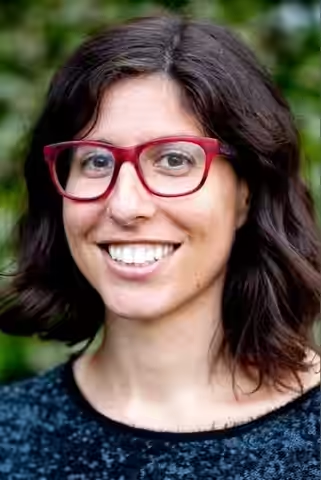
Carly Mensch writes for rooms full of women unsure they belong in them, and is best when she stops explaining and lets them perform. GLOW, made with Liz Flahive, is the case for her; nothing else yet makes it as well.
Fi1m perspective
The thing Carly Mensch keeps putting on screen is a group of women in one room who did not choose each other. In GLOW (2017) the room is a gym in 1985 and the women are a dozen would-be wrestlers, and the writing is at its best not when someone says what the show is about but when two of them climb into the ring and work out a match. Mensch created it with Liz Flahive and the two have written together since, so it is hard, and probably pointless, to say where one stops and the other starts. What they do is clear enough. "We are not trying to write superheroes, but we are trying to write people who aren’t perfect," Mensch has said, and that is the show: nobody in it arrives good at this.
She came up as a playwright, with Len, Asleep in Vinyl (2008) among the early productions, and moved into television as a staff writer on Weeds in 2010, then Nurse Jackie and Orange Is the New Black. Our Weeds review does not mention her, and there is no reason it should; she joined five years in, by which point, on our reading, Jenji Kohan's suburban comedy had already changed shape and thinned out. The apprenticeship shows all the same. Kohan is among the writers on GLOW, and its pattern of a female ensemble, one building and comedy that turns serious without warning is hers; Flahive and Mensch learnt it from the inside.
The theatre shows too, and it is the more interesting inheritance. Wrestling on GLOW is written as performance, a scripted fight with a villain and a crowd to be worked, and the show knows that a body doing something difficult in front of people is a scene in itself. We were surprised by how much we cared the first time one of these bouts came together, fake from the first bell and completely absorbing, because we had watched the women fail at it for so long that the success felt earned. Betty Gilpin is the find, and the writers knew what they had. The faults are the faults of generosity. It takes half a season to get going, and there are more wrestlers than the scripts can use, so some of them wait a long time for anything to do. We gave it 78 and would again.
It stopped after three seasons without the fourth it was plainly building towards, which is nobody's fault on the page but leaves the work looking unfinished. Roar (2022), again with Flahive, is an anthology about women's lives told through magical realism; we have not reviewed it and will not judge it here. What we will say is that the gym was the right size for her. Mensch writes best when a group of people is stuck in one place and has to make something together. The next thing worth watching from her will be another room.
Biography
Carly Mensch is an American playwright, television writer and producer. She graduated from Dartmouth College in 2005 and trained at the Juilliard School. Her stage work includes the Off-Broadway play Len, Asleep in Vinyl, later adapted into the film Len and Company, as well as Oblivion and All Hail Hurricane Gordo.
Mensch has written and produced for the series Weeds, Nurse Jackie and Orange Is the New Black. She co-created the Netflix series GLOW with Liz Flahive, for which she also wrote and served as executive producer; the show earned her a Primetime Emmy Award nomination for Outstanding Comedy Series in 2018. She later created and showran the series Roar.