DeMille made the American epic: crowds, weather, God and sin, all filmed from the best seat in the house. When he points the camera at a multitude or a plague he is still worth the evening; when his people start talking, the evening gets longer.
Fi1m perspective
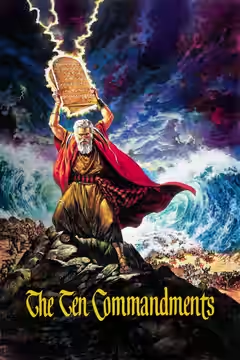
A gate opens and several thousand people walk out through it, with carts and goats and geese and old men on litters, and DeMille holds the shot until the column reaches the horizon. That is the Exodus in The Ten Commandments (1956), and it is his whole method in one frame. He does not cut to a face to tell us how to feel about the crowd. He trusts the crowd. We had expected to be counting extras, and instead we were moved, more than we would care to admit, by the plain sight of that many people leaving a city.
He came from the theatre, as an actor and a playwright, and in 1913 went into pictures with Jesse L. Lasky and Samuel Goldwyn; The Squaw Man (1914) was one of the first features shot in Hollywood. The early films were social dramas and comedies. Then in the 1920s he found the shape he would keep for the rest of his life: the biblical epic, The Ten Commandments (1923) and The King of Kings (1927), scripture and sin in the same reel, the sermon and the orgy sharing a bill. He came back to it with Samson and Delilah (1949) and finished with the second Ten Commandments, walking on before the titles to tell us what it was about. He kept his people close: Alvin Wyckoff shot 43 of his films, Jeanie Macpherson wrote 15, Gloria Swanson made six with him.
What works is anything you can see. Loyal Griggs's palace in torchlit reds and gold; the tenth plague as a green mist creeping under doors while Elmer Bernstein's score drops to one low held chord; George Barnes's Technicolor tent going up at dawn in The Greatest Show on Earth (1952), elephants leaning into the poles, Anne Bauchens cutting so the ring never sits still. What does not work is anything you have to listen to. The romances in the circus film are stiff and the narration is pompous; the dialogue in The Ten Commandments never lands, and Heston is a man to be answered back from the sofa. Critics have long called him theatrical and careless of history, and both charges stick, though we doubt anyone watching the sea part was checking dates.
He said he made his pictures for people, not for critics, and we take the point while noting that we are both. Start with the 1956 Ten Commandments, with a break where he put the intermission, and do not expect the people to be as interesting as the weather. In two long evenings with him they were not. Yul Brynner is the exception, and he is worth staying for.
Biography
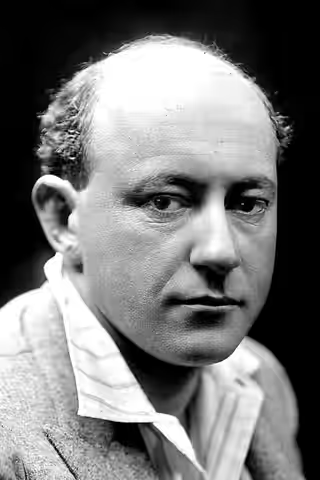
Cecil B. DeMille was an American film director and producer. Born Cecil Blount DeMille on 12 August 1881 in Ashfield, Massachusetts, he died on 21 January 1959 in Hollywood, California. With Jesse L. Lasky and Samuel Goldwyn, he co-founded the Jesse L. Lasky Feature Play Company in 1913; the company later became part of Paramount Pictures. He directed his first feature, The Squaw Man, in 1914.
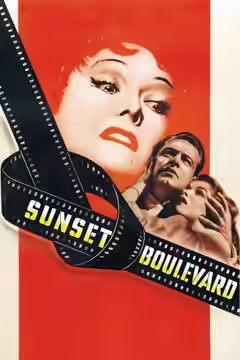
DeMille directed more than seventy feature films between 1914 and 1956. He is best known for large-scale epics including The Ten Commandments (1923 and 1956), The King of Kings (1927), Samson and Delilah (1949), The Greatest Show on Earth (1952) and Cleopatra (1934). He also directed Sunset Boulevard (1950) star Gloria Swanson in earlier films and appeared as himself in that production.
From 1936 to 1945 he hosted and directed the Lux Radio Theatre. He was a founder of the Academy of Motion Picture Arts and Sciences.