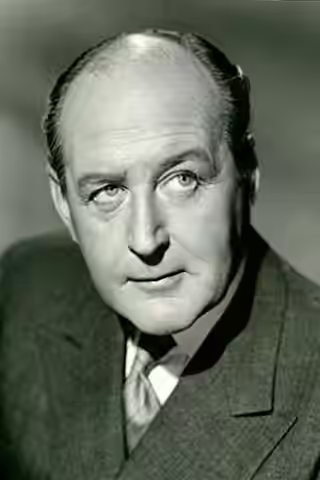
Cecil Parker played the Englishman who would rather not get involved: the official, the touchy officer, the husband with something to hide, all in the same husky, put-upon voice. It is a small trade, and he kept it honest for the better part of forty years.
Fi1m perspective
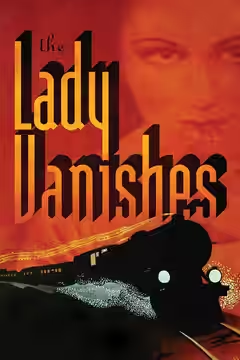
Cecil Parker's characters are always slightly annoyed. Something has been asked of them that they would rather not do, and they say so in that husky, put-upon voice before, usually, doing it anyway. He played the touchy senior officer, the official, the head of the firm, and he played them as men whose dignity is a coat they keep having to button. In The Lady Vanishes (1938) he is Eric Todhunter, a nervous would-be adulterer who has more reason than most on the train to hope nothing is wrong, and Hitchcock's film is partly about people like him, making excuses for not noticing trouble. Our review of that film did not stop to mention him, and neither do most people who see it, which suits the part.
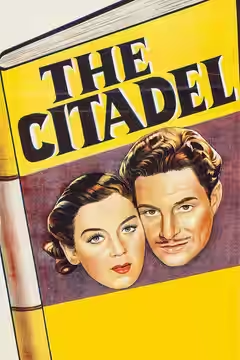
He came to films from the London stage, where he had started in 1922, and by 1938 he was busy enough to appear in two Hitchcock pictures in one year and in The Citadel (1938) as Dr Charles Every, one of the comfortable London doctors around Robert Donat's idealist. We found that half of King Vidor's film tidy to a fault, each scene proving one point and stopping, and Parker is part of the furniture there: the profession's comfortable face, present to be disapproved of. He is good at it. He is not given anything to do with it.
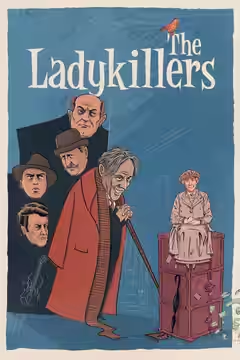
The late 1940s brought him a few leads, and the 1950s brought him back to what suited him, character parts in Ealing comedies and elsewhere. Two of them were for Alexander Mackendrick, both opposite Alec Guinness: Alan Birnley, the industrialist in The Man in the White Suit (1951), and the Major in The Ladykillers (1955), a shifty man whose military bearing looks borrowed. We laughed at the Major more than we expected and felt slightly sorry for him, because Parker lets you see the effort it costs to keep the manner up. That is his trick: the stuffiness is never quite secure, and the comedy lives in the gap. He took the same manner to Hollywood as King Roderick in The Court Jester (1955) and to Disney as Captain Moreland in Swiss Family Robinson (1960), and it travelled.
The case against him is thin. The nearest anyone comes to a reservation is that after the late 1940s he was seldom asked to carry a film, and that is a complaint about the industry rather than the actor. The case for him is that he had precise timing, could get a laugh out of two lines in an office scene, and by common account never gave a poor performance in a career that ran until 1969.
Start with The Lady Vanishes, then The Ladykillers, and watch what he does while the leads are talking. Then go back to The Citadel and notice how little the film asked of him.
Biography
Cecil Parker (born Cecil Schwabe) was an English actor who appeared in supporting roles in British and American films from the 1930s to the late 1960s.
He made his stage debut in London in 1922 after serving in the First World War and his first film appearance in the early 1930s. He is known for roles including Eric Todhunter in The Lady Vanishes (1938), Alan Birnley in The Man in the White Suit (1951), the Governor in Under Capricorn (1949), Claude in The Ladykillers (1955), Captain Moreland in Swiss Family Robinson (1960), King Roderick I in The Court Jester (1955) and Alfred Munson in Indiscreet (1958). He also appeared in television series such as The Avengers and The Saint.
Parker originated the role of Charles Condomine in the West End production of Noël Coward's Blithe Spirit.