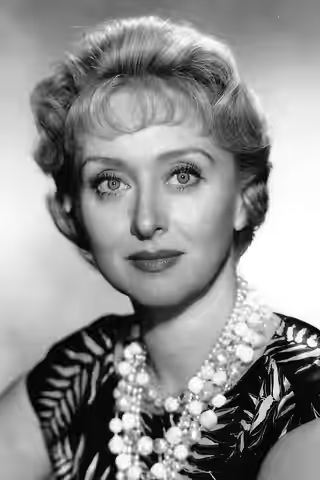
Celeste Holm's trick is to be handed the best line in a scene and decline to make a meal of it. It is why she survives in ensembles built around louder names, and why Hollywood never quite worked out what else to do with her.
Fi1m perspective
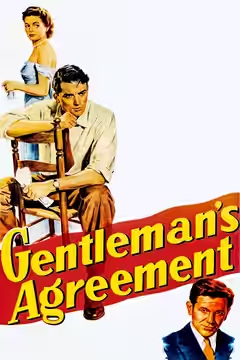
Watch what Celeste Holm does with a good line. Most actors, given the sharpest remark in a scene, lean into it and wait for the laugh. Holm says it on her way to something else, as though the wit were a by-product of being intelligent, and moves on. As Anne Dettrey in Gentleman's Agreement (1947), the fashion editor who says what she thinks, she has the best lines in the film and throws them away, and it is a large part of why her scenes breathe when so many around them do not.
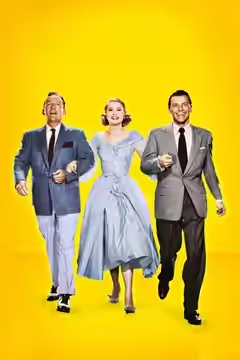
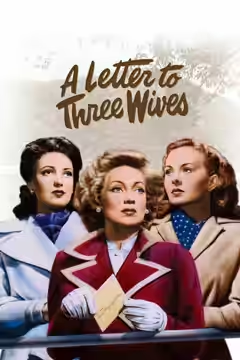
She came to films from the stage, where she had made her name as Ado Annie on Broadway in 1943, and the musical-comedy training shows in the timing: she hears the rhythm of a sentence and knows where the weight belongs. Fox signed her in 1946 and gave her a debut in Three Little Girls in Blue the same year; Gentleman's Agreement, Come to the Stable (1949) as Sister Scholastica and All About Eve (1950) followed inside four years. Then she went back to the stage, stepping into The King and I, and returned only now and then, for The Tender Trap (1955) and High Society (1956), before television took most of the rest.
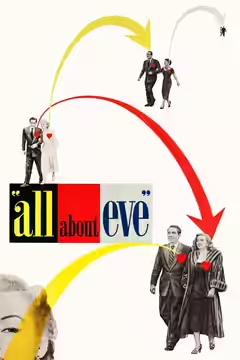
Her Karen Richards in All About Eve is the performance we would send a stranger to. Mankiewicz gives her the narration and the thankless part of the good friend, and Holm plays her as a decent woman who is a little too pleased with her own decency. Against Bette Davis at full volume and George Sanders at full purr, she gives the company a welcome sense of independent life; you believe she has a mind that goes on working when the camera leaves. We were moved by her more than we expected, in the later scenes where Karen's certainties start to slip and Holm lets the good humour drain out of her face without making a show of it.
The limits were not hers so much as the studio's. Fox saw a musical-comedy performer and cast her as the witty friend, the observer, the woman who comments on the plot rather than driving it, and once All About Eve had fixed that picture the parts did not widen. Her Liz Imbrie in High Society, trading Cole Porter's "Who Wants to Be a Millionaire?" with Frank Sinatra, is charming and is also more of the same. One can see why she kept going back to a stage that let her lead.
If you know her only as the voice at the start of All About Eve, start there, then see what she does inside Kazan's lecture. Both films are better for her being in them, and both leave you wondering what a lead written for her might have looked like.
Biography
Celeste Holm was an American actress. Born on 29 April 1917 in New York City, she died on 15 July 2012. She studied at the University of Chicago and began her professional career on stage in the late 1930s. Holm originated the role of Ado Annie in the 1943 Broadway production of Oklahoma!. She made her film debut in Three Little Girls in Blue (1946).
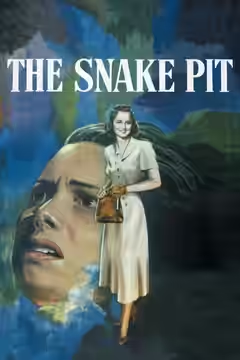
Holm won the Academy Award for Best Supporting Actress for her performance in Gentleman's Agreement (1947). She received Academy Award nominations for Come to the Stable (1949) and for her role as Karen Richards in All About Eve (1950). She is also known for her work in The Snake Pit (1948), High Society (1956) and later television appearances.