Everyone remembers the voice, and the voice was the least of it. Boyer's real trick was to do less as a scene went on, until a romantic lead was hardly moving at all, and in Love Affair that stillness carries the whole last reel.
Fi1m perspective
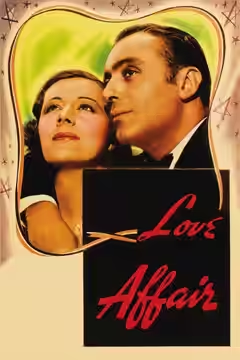
Watch what Charles Boyer does at the end of Love Affair (1939). He has spent the Atlantic crossing talking to Irene Dunne, easily and with obvious pleasure, and Leo McCarey has let the pair of them wander off the point for the best part of forty minutes. By the last scene Michel Marnet barely speaks and barely moves. A man who could have coasted on that deep, purring voice has put it away, and the scene works because he has.
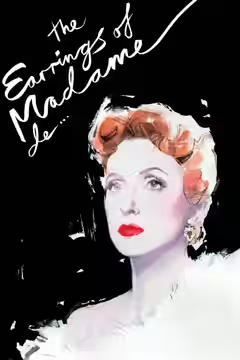
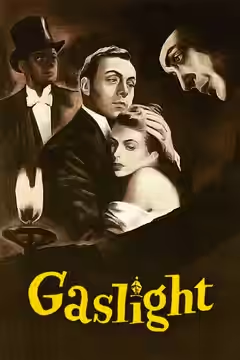
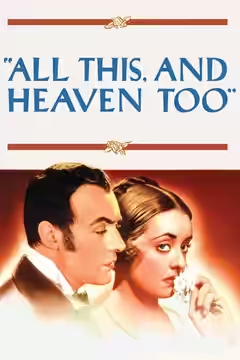
The career runs the usual arc a little more gracefully than most. French theatre in the 1920s, silent films from 1920, then Hollywood in the early 1930s for French-language versions and English parts, and a contract with Walter Wanger that made him a leading man. The peak is Algiers (1938), Love Affair, All This, and Heaven Too (1940) opposite Bette Davis, and Gaslight (1944), where he is the husband and Ingrid Bergman the wife, and where critics have always noticed that the charm and the menace come out of the same register. Then character parts and Broadway in the 1950s, Max Ophüls's The Earrings of Madame de... (1953), and a late turn for Alain Resnais in Stavisky... (1974). He made three films each with Dunne, with Claudette Colbert and with the director Anatole Litvak, and he was at his best when a director trusted him to listen.
The joke that followed him was a line he never said. The impersonators put the invitation to the Casbah in his mouth after Algiers, and for decades that was Boyer: an accent, a gaze, a hand on a railing. It sells him short. We came to Love Affair braced for exactly that and instead found ourselves laughing a good deal at two people enjoying a conversation, and then, when he stopped talking, moved further than the heavy plotting of the second half had any right to take us. What did it was the shrinking. He plays Michel smaller with every scene until there is almost nothing left to watch, and you watch it anyway.
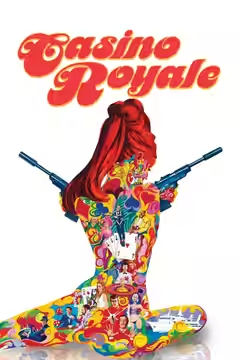
He is not in every good film he is in. Casino Royale (1967) parks him as Le Grand, one of four spy chiefs who arrive at David Niven's country house to beg him back to the service and are treated like tradesmen who have come on the wrong day. Niven has the scene; Boyer has a chair. It is a fair picture of the last phase, when the parts were smaller than the man and he did not seem to mind.
Start with Love Affair, before either remake, and pay attention to how little he does. He was dry about the whole business himself, and claimed he only became as good-looking as everyone said once he had lost his hair and started experimenting with toupees.
Biography
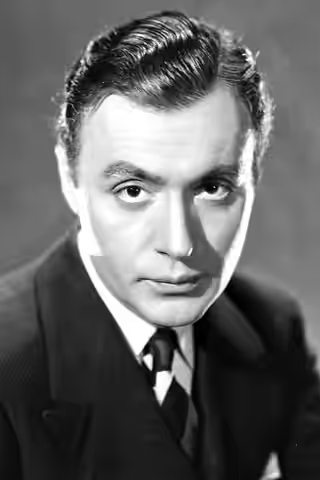
Charles Boyer was a French actor who appeared in more than 80 films between 1920 and 1976. He studied philosophy at the Sorbonne and trained in drama at the Conservatoire de Paris before beginning his career on the stage in the early 1920s.
Boyer achieved success in Hollywood during the 1930s and became known for romantic leads in films such as Algiers (1938) and Love Affair (1939). Later roles included Gregory Anton in Gaslight (1944), Bernard De Solnay in How to Steal a Million (1966), and Le Grand in Casino Royale (1967). He received four Academy Award nominations for Best Actor and an Honorary Award in 1943.