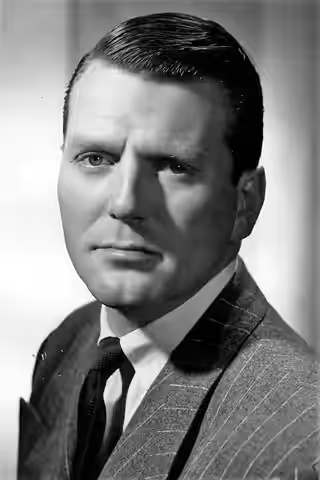
A gravel voice and a craggy, imposing face. Charles McGraw played cops, gangsters and officers who would not explain themselves, and for a few years at RKO he carried films alone.
Fi1m perspective
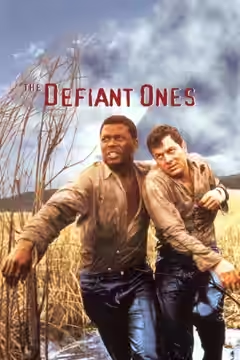
The state man in The Defiant Ones (1958) arrives with the dogs and would rather let them off the lead. Charles McGraw plays Capt. Frank Gibbons with almost nothing: a few lines, a level stare, a low grind of a voice. His argument with Theodore Bikel's sheriff runs alongside the chase, and he wins his half of it by saying less. That was McGraw's trade for thirty-five years. He stood at the edge of a scene, said the hard thing once, and left the other actors to look uneasy.
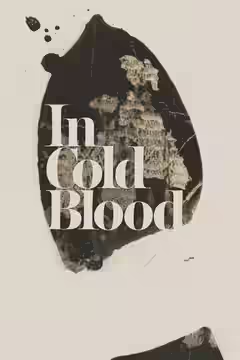
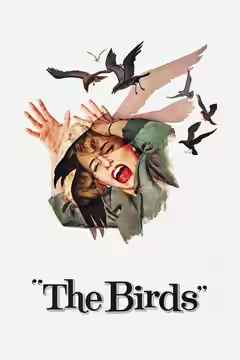
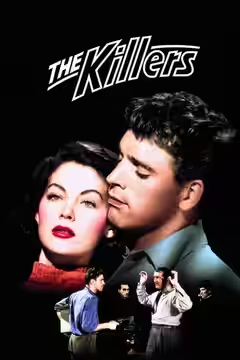
He came to films from the stage, including Broadway in Golden Boy, and did bit parts from 1942 before The Killers (1946) cast him as Al, one of the two hitmen who open the film. RKO then gave him a short run of leads in lean noirs, Armored Car Robbery (1950) and The Narrow Margin (1952) among them. The Narrow Margin is the one people mean when they say his name: Det. Sgt. Walter Brown, a cop in a tight space with no time for speeches. From the mid-1950s he went back to supporting parts, in westerns, in epics and on television, usually as somebody in authority. Marcellus, the gladiator trainer in Spartacus (1960), is the one most often remembered from this stretch; The Birds (1963) and In Cold Blood (1967), where he plays Tex Smith, a stern father, followed. He kept working until 1977.
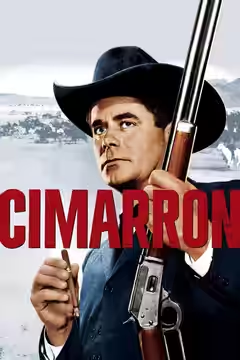
Directors who wanted that flatness came back for it. Richard Fleischer and Anthony Mann each used him three times. In Mann's Cimarron (1960) he and Vic Morrow, as Bob Yountis and Wes Jennings, give the town the meanness it otherwise lacks; it is a small part in a slow film. What he could do was economy. What he could not do, or was never asked to do, was change his mind on screen. The face did not bend that way, and the parts he was given did not ask it to.
Which is why The Defiant Ones stays with us. Kramer and his writers want us to side with Bikel's Sheriff Muller, and they say so plainly enough that we can feel the nudge. McGraw's Gibbons never asks for our agreement, and we caught ourselves half taking his side against the film's. That was uncomfortable. It is also, we suspect, why the argument feels like a real one rather than a lesson.
His reputation rests on the character parts and not on any run as a star, and those who write about him tend to say so with regret. We are not sure regret is the right response. Start with The Narrow Margin, then watch him in The Defiant Ones and count how much of the film's second argument he carries without a single speech.
Biography
Charles McGraw (born Charles Crisp Butters) was an American actor. He appeared in stage, film and television roles from 1942 to 1977.
McGraw was born on 10 May 1914 in Des Moines, Iowa, and died on 29 July 1980 in Los Angeles, California. His early film work included a supporting role in The Killers (1946). He later appeared in Spartacus (1960) as Marcellus, Cimarron (1960) as Bob Yountis, The Birds (1963) as Sebastian Sholes, It's a Mad, Mad, Mad, Mad World (1963) as Lt. Matthews, In Cold Blood (1967) as Tex Smith, Hang 'em High (1968) as Sheriff Ray Calhoun, and A Boy and His Dog (1975) as Preacher.
He received a star on the Hollywood Walk of Fame for his television work.