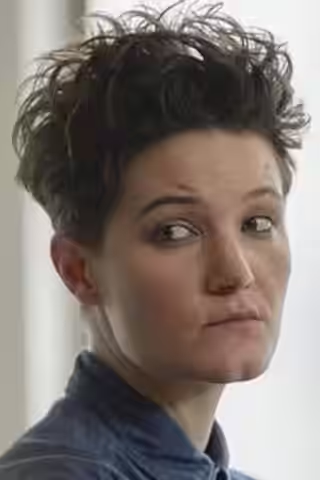
Charlie Covell writes awful people saying awful things to each other and makes us like them for it. On The End of the F*ing World that gift came with discipline; on KAOS it came with eight hours, and the discipline went.
Fi1m perspective
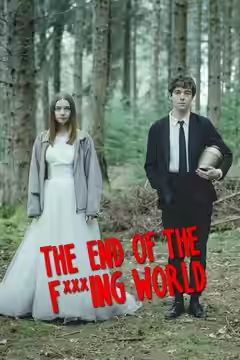
In the first episode of The End of the F*ing World (2017), James tells us he is a psychopath. He says it in voice-over, flat as a train announcement, while Alex Lawther's face tells us the truth: a frightened seventeen-year-old who has read about psychopaths and would like to be one. Charlie Covell gives both leads a voice-over, so we hear the thought and watch the lie. Most of the jokes and nearly all the hurt come from the gap between them.
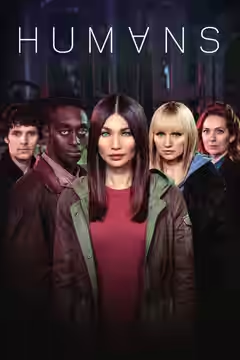
Covell began in front of the camera, with small parts from 2003 in The Inbetweeners, Peep Show and Misfits, and did not write for television until two episodes of Russell T Davies's Banana in 2015. The same year brought the feature Burn Burn Burn and a writing credit on Humans, thoughtful science fiction about the people expected to serve us, which we liked without noticing Covell's hand in particular. The hand becomes unmistakable with The End of the F*ing World, adapted from Charles Forsman's comic: sixteen short episodes over two series, every one of them Covell's, with Jonathan Entwistle, who created the series, directing so that the joke about a boy who wants to murder somebody and the love story about two children nobody has looked after run side by side without either smothering the other. The second series is less sure of itself. The first knows exactly when to stop.
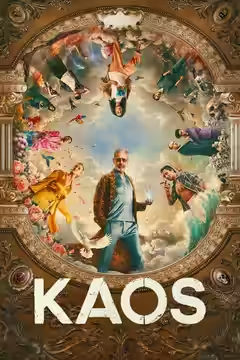
KAOS (2024), which Covell created and wrote, is the test of what happens when the stopping is taken away. Zeus (Jeff Goldblum) sits in a white villa on Olympus with a pool, a sister for a wife and a prophecy he has spent centuries not reading, and for three episodes the series has real swagger. Goldblum plays him vain and frightened at once and is a pleasure. Then the mortals arrive, three threads with a prophecy each, cross-cut so evenly that each stops to let the others catch up. By the fifth hour we were reciting the prophecy along with the cast, and we were irritated, because the ear for how awful people talk to one another was still there in every scene; it was the discipline that had gone. The series was cancelled after one run. The same year Covell co-created Truelove with Iain Weatherby, a dark comedy-thriller with older people at its centre, which we have not reviewed.
The method is consistent: take a story somebody else told, a comic or a myth, set it in a Britain that looks like ours but slightly louder, and keep the humour deadpan. Covell has described the aim as getting "that balance of it being deadpan and wry without being cold and arch", and the acting years show in it; these are lines written by someone who has had to say other people's. Next is an adaptation of the video game Life Is Strange, another borrowed story. We would ask only that the episodes be short.
Biography
Charlie Covell is a British writer, showrunner and actor. They were born in Blackheath, London, and studied English at the University of Oxford. Covell uses they/them pronouns.
Covell began their screen career as an actor, with early roles including a part in Fortysomething (2003) and appearances in Midsomer Murders (2008), The Inbetweeners (2010) as Sophie Brown, Peep Show (2012) and Misfits (2012). As a screenwriter, they contributed to Banana (2015) and wrote the film Burn Burn Burn (2015). They created and wrote the Channel 4 series The End of the F*ing World (2017–2019) and the Netflix series Kaos (2024), which was cancelled after one season. They also wrote an episode of Humans (2016) and created the miniseries Truelove (2024).