Christopher Menaul is at his strongest with police officers and the pressures of an institution. We rate his handling of ensembles and his attention to motives; his lighter feature work can be polished and thin.
Fi1m perspective
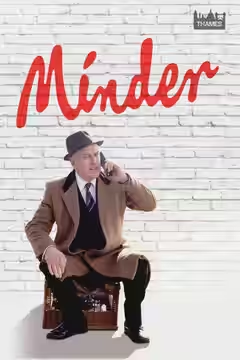
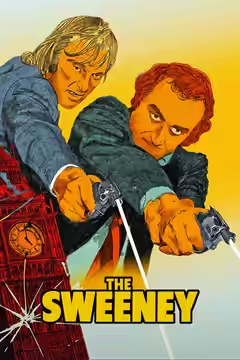
John Thaw and Dennis Waterman give The Sweeney (1975) its force and humour, with drab London locations keeping it firmly on the ground. Christopher Menaul directed episodes between 1976 and 1978, so its success cannot simply be claimed as his. But it is a useful place to start with a director whose strengths lie in handling groups of people under pressure. We were unsettled by the violence: it has weight, and the programme is sometimes too fond of the men inflicting it.
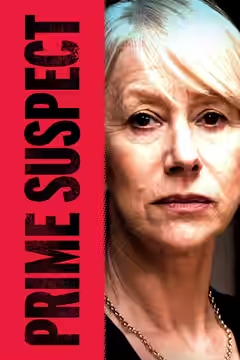
After early episodic work that also included Minder and Play for Today, wider recognition came with the first Prime Suspect miniseries (1991). Its pacing and handling of the ensemble suit a police story concerned with how an institution behaves. Menaul pays attention to the motives of the people working inside it, which gives the investigation more to sustain it than the next piece of evidence. His collaborators include the writer Lynda La Plante, an apt association for a director whose interest in crime extends to the people charged with investigating it.
Fatherland (1994), adapted from Robert Harris's novel, takes that interest into an alternate-history thriller, while See No Evil: The Moors Murders (2006) approaches a British crime case with restraint. Both give him material suited to his strengths: tension sustained through attention to character. His feature work includes the Merchant Ivory-produced period drama Feast of July (1995) and Summer in February (2013), based on the story of a Cornish artistic community. Moving away from police work has often meant turning to the past, though a historical setting is not itself a reason to recommend his work.
The reservation concerns what happens when polished execution has too little beneath it. First Night (2010) exposes that weakness, with insufficient emotional depth or satirical bite to justify the care taken over its presentation. We have more use for the force and humour of The Sweeney, even with its troubling enthusiasm for rough handling. Start there, with the caveat that enjoying Thaw and Waterman's company need not mean approving of the conduct.
Biography
Christopher Menaul is a British film and television director and writer. He was born on 25 July 1944 in the UK.
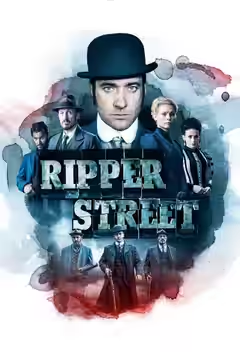
Menaul began directing in the 1970s, with credits including episodes of the series The Sweeney (as Chris Menaul). In 1991 he directed two episodes of the miniseries Prime Suspect. His other television work includes episodes of Ripper Street (2012), Zen (2011) and Chasing Shadows (2014), as well as the television films Fatherland (1994) and Killing Jesus (2015). Feature films he has directed include Feast of July (1995), Summer in February (2013) and Another Mother's Son (2017).
He has received BAFTA awards for his work in television.