Chuck Lorre builds sitcoms the old way: several cameras, a live audience, a sofa and people who change a little each week. It has held audiences for a decade at a time; moved off the sofa, in Stuart Fails to Save the Universe, the machinery shows.
Fi1m perspective
The last thing on screen in a Chuck Lorre episode is not a joke. It is a card: a block of small type, up for a second or two, in which he complains about the network, or the week, or himself, and which you have to pause to read. Nothing else in his work stops moving. It tells you something about the man who built the machine, and he has put it plainly himself: "I work from a deep sense of insecurity. I have the belief, and I can't shake it, that there are endless reasons to turn the channel."
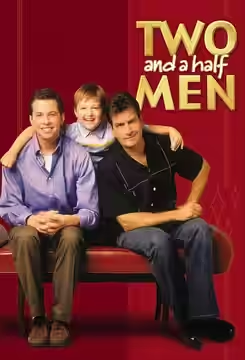
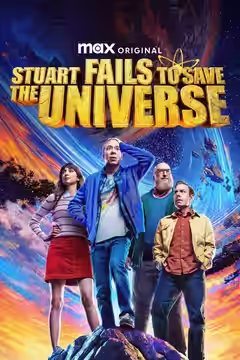
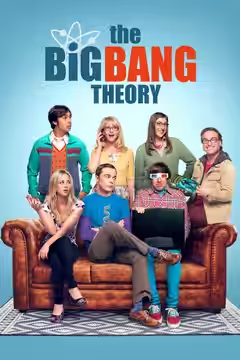
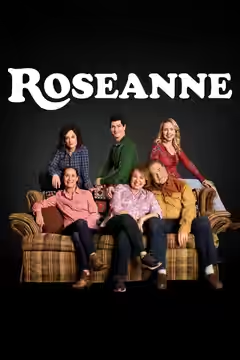
He came to television from music, a guitarist and songwriter who wrote animation and sitcom episodes in the late 1980s before landing a job on Roseanne in 1990, where he wrote and produced for two years. We rate that series highly, for taking money worries seriously and for Sara Gilbert, and he was one hand among many on it. His own shows followed quickly: Grace Under Fire (1993), Cybill (1995), Dharma & Greg (1997). Then the two that made him. Two and a Half Men ran from 2003 to 2015; The Big Bang Theory, created with Bill Prady, ran from 2007 to 2019 and has since bred Young Sheldon (2017–24) and Stuart Fails to Save the Universe (2026).
The method has barely moved in three decades. Several cameras, a live audience, a sofa, and flawed people who improve by inches and slip back. The complaint that this is old-fashioned, that the laugh track dates a show the moment it airs, has followed him since Two and a Half Men, and it is fair. It is also the whole point. He is not trying to reinvent anything; he is trying to keep you from changing the channel, week after week, for a decade. Mom (2013–21) is the best case for the method: a comedy about addiction and recovery, played in front of an audience, that made room for the sad parts without dropping the jokes.
The limits show when he gets up off the sofa. Stuart Fails to Save the Universe takes four of The Big Bang Theory's background players, Kevin Sussman's comic-shop owner chief among them, and knocks them across a multiverse, and the rhythm of setup, beat and punchline that works with everyone sitting down does not survive people running down corridors. We watched all ten episodes waiting for a scene to end on a laugh rather than on a reference, and by the fifth we were counting how many were left. Sussman and Brian Posehn are good company throughout. The writing keeps handing them something to recognise when it owes them a joke.
There will be another. It will have a sofa and an audience that laughs on cue, and a card at the end for the few who bother to pause. Someone will call it old-fashioned. He will already have written a card about that.
Biography
Chuck Lorre, also credited as Charles Michael Levine, is an American television writer and producer. Born in 1952 in Plainview, New York, he began his career as a songwriter and musician before moving into television writing, with early credits on series including Charles in Charge and My Two Dads.
He worked as a writer and producer on Roseanne (1988) during its third and fourth seasons. Lorre went on to create or co-create a series of successful sitcoms, including Grace Under Fire (1993), Cybill (1995), Dharma & Greg (1997), Two and a Half Men (2003), The Big Bang Theory (2007), Mom (2013) and Young Sheldon (2017). He has also written for and produced The Kominsky Method (2018).
Lorre has received Golden Globe Awards for his work on Roseanne, Cybill and The Kominsky Method.