Clark Mathis gives Rocky Balboa a wintry look that suits its sadness. We find less to admire in Norbit, where his images leave the performers to do nearly all the work.
Fi1m perspective
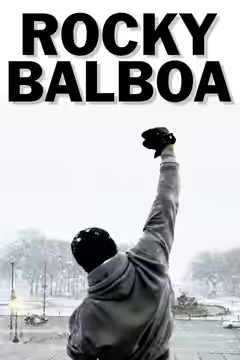
The winter greys and streetlamp orange in Rocky Balboa (2006) make the old neighbourhood feel like somewhere Rocky cannot bring himself to leave. Clark Mathis shoots mostly handheld, keeping the image modest enough for a film about a man still telling his old stories. Production designer Franco-Giacomo Carbone fills the restaurant walls with framed fight photographs, giving those recollections something visible to refer to. We were moved by these scenes because Stallone lets us see that Rocky knows he is boring people and carries on anyway. Mathis gives that performance space without insisting that we admire the photography.
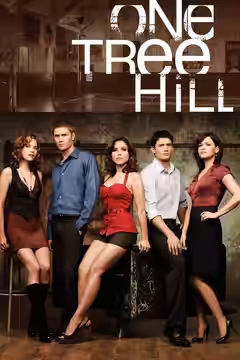
His work has moved between feature and television cinematography since the late 1990s, with directing alongside it. His directing credits include One Tree Hill (2003) and Bereft (2004), a feature co-directed with Tim Daly which he also shot and edited. The later Meet Dave (2008) continued his collaboration with Brian Robbins and Eddie Murphy, extending the studio-comedy side of a career that has accommodated rather different demands.
Norbit (2007), directed by Robbins, is where this unobtrusive approach gives us too little. With Murphy playing three roles amid extensive make-up and visual-effects work, the photography has considerable practical demands to meet. But Mathis offers little visual interest beyond the faces and bodies, and Clay A. Griffith’s production design does not provide much else to look at. The film keeps repeating its physical mockery, and the images do nothing to relieve the exhaustion. Murphy’s commitment deserves credit, but the photography leaves too much of the responsibility for holding our attention to him.
Mathis’s emphasis on atmosphere rather than technical display makes sense to us, but restraint alone is not much to recommend a cinematographer by. In Rocky Balboa, the subdued colours help us understand Rocky’s attachment to familiar places; that is a specific contribution we can value. Start there for his photography, with our caveat about the film itself: its quiet first hour is more rewarding than the fight.
Biography
Clark Mathis is an American cinematographer and television director, sometimes credited as J. Clark Mathis. He began his career as a camera loader on the 1991 film The Indian Runner and later studied film at Duke University after an internship at a local television station in Hampton, Virginia.
As director of photography, his feature credits include Rocky Balboa (2006), Norbit (2007), Meet Dave (2008) and A Thousand Words (2012). He has also worked on television series such as Grimm and One Tree Hill. Mathis made his directorial debut co-directing the 2004 film Bereft with Tim Daly and has since directed episodes of series including Blue Mountain State and Supah Ninjas. He is a member of the American Society of Cinematographers.