Clint Bentley writes, nearly always with Greg Kwedar, about men who are watched more than they are heard, and he puts people who have lived the story beside the actors playing it. The results are good, and best when nobody is explaining.
Fi1m perspective
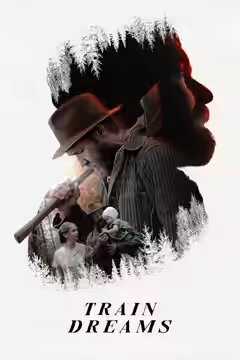
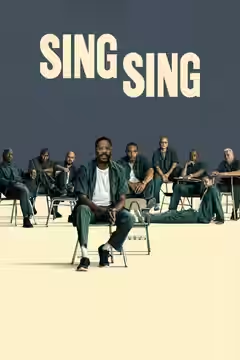
Robert Grainier in Train Dreams (2025) fells trees, hauls timber and lays railway track in the Idaho panhandle, and does nearly all of it without speaking. John 'Divine G' Whitfield in Sing Sing (2024) is first seen in costume, on a stage, speaking Shakespeare to an audience we cannot see, and is then locked back into a cell. Clint Bentley had a hand in writing both, and those two openings tell you what he is after: a man defined by what he does and where he is put, with the talking kept short. When the films hold to that, they are good. When they lose their nerve about it, they are still good, but less so.
He arrived as one half of a pair. He co-wrote Transpecos (2016) with Greg Kwedar, who directed it, and the two have now written four films together, taking turns to direct. Bentley directed his own script for Jockey (2021). Kwedar directed Sing Sing, which they wrote from a story they share with Whitfield and 'Divine Eye' Maclin, both of whom had been through the prison's theatre group. Bentley then directed Train Dreams, written with Kwedar from Denis Johnson's short novel. The method is the same each time: go and stand in the place first. He volunteered in a prison theatre programme while writing Sing Sing, and his films put non-professionals who know the world next to the actors who do not.
That is where the two films part company for us. Sing Sing trusts its room. Maclin is a former inmate and never once looks like he is acting, and most of the faces around Colman Domingo belong to men who have been through the programme too. It moved us more than we thought it would, and the reason is plain: in the rehearsal scenes nobody is performing being in prison, because nobody needs to. The plot around those scenes is thinner than they are, and the film knows it and gets back to rehearsal.
Train Dreams has the same trust in its actor and then covers it up. Joel Edgerton builds Grainier almost entirely out of watching, and he has every scene in hand. Bentley keeps Johnson's events but adds Will Patton's narration to tell us what Grainier felt about them, sometimes while Edgerton is already showing us, and Bryce Dessner's strings rise under moments that were full to begin with. Twice we caught ourselves resenting it. Most critics reached for Terrence Malick and worried, if they worried at all, about the pace. The pace is fine. The problem is that a writer who has made two films about men who do not explain themselves decided, in the second, to explain one of them.
Bentley has said he would not have had the courage to film Johnson's book until producers who had seen Jockey came to him. The courage is there now. What the next film needs is the confidence to leave the voice by the stove out of it, because on the evidence of both these films the men he writes are better company when nobody is speaking for them.
Biography
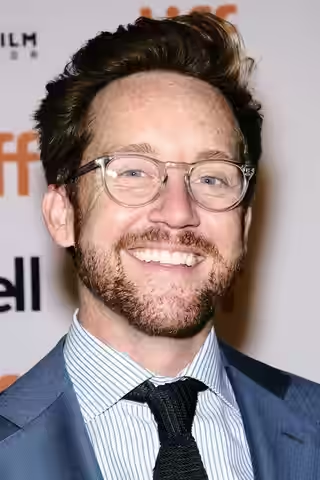
Clint Bentley is an American film director and screenwriter. He was born on 1 January 1985 on a cattle ranch in Florida and graduated from Stetson University in 2008.
Bentley made his feature screenwriting debut with Transpecos (2016), which he co-wrote with Greg Kwedar. He directed and co-wrote his first feature, Jockey (2021), which premiered in competition at the Sundance Film Festival and won the Special Jury Prize for Best Actor. He produced, co-wrote the story and co-wrote the screenplay for Sing Sing (2023), directed by Kwedar. Bentley directed and co-wrote Train Dreams (2025). He and Kwedar have been nominated for the Academy Award for Best Adapted Screenplay for both Sing Sing and Train Dreams.