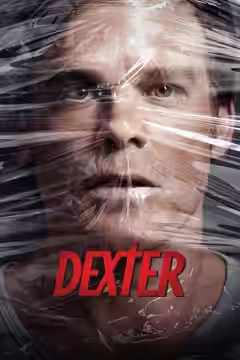
Clyde Phillips writes murderers who talk to us, and the talking is the trick: the voiceover makes Dexter Morgan good company and lets him off too easily. He builds a season as well as anyone, and he keeps building them around the same man.
Fi1m perspective
A man in a kitchen, or on a boat, or at a dinner table of murderers, and a calm, faintly amused voice in our ear telling us what he is thinking. That voice is Clyde Phillips's instrument. He did not invent Dexter Morgan; he joined Dexter (2006) after the pilot, rewrote and reshot some of it, and ran the first four series. But the voiceover is where he lives. He has said it was the main reason audiences invited a serial killer into their homes every Sunday night, and he is right. It is also, as we said in our review, why the writing explains Dexter too often and makes liking him too easy. Michael C. Hall's stillness does the hard work; the narration keeps stepping in to tell us it is all right.
He came to it from comedy, which explains a good deal. Phillips created Parker Lewis Can't Lose (1990), Suddenly Susan (1996) and Get Real (1999) before anyone let him near a body, and the Dexter he ran was a sitcom with plastic sheeting: a fixed household, a code, a new guest villain each year. Each season was built around one antagonist, and the fourth, in 2009, with its Trinity Killer, is the one everybody still points to. The third is the one they do not. He left after the fourth, ran the last three series of Nurse Jackie (2013 to 2015), tried a one-season adaptation of a Danish series with Feed the Beast (2016), and then went back to Dexter.
Back three times, so far: Dexter: New Blood (2021), the prequel Dexter: Original Sin (2024) and Dexter: Resurrection (2025). New Blood was competent and thin, and its ending was widely disliked, for reasons we will not go into. Resurrection is better, and it is better because Phillips admitted at last that the show is a comedy. Dexter at a supper club of worse people, the most reasonable man at the table; Peter Dinklage hosting like a man showing off a wine cellar; Brian Cox frightening for two scenes. We laughed at those dinners, at the etiquette and the small talk, and then felt grubby about it, and we think that was the point, because it is the one place the show has an idea. Everywhere else it is quoting itself, and it knows we will recognise the quotes.
Hall has now played the man across four series and Phillips has written every one of them, with Scott Reynolds beside him for three and Marcos Siega directing on two. It is a real partnership and it is also the whole of his reputation. He builds a season as well as anyone working in television, and he has spent the years since 2006 building them around the same kitchen. We would like to see what he does with a killer he did not inherit.
Biography
Clyde Phillips is an American television writer and producer. Born on 3 October 1958 in Dorchester, Boston, Massachusetts, he created the series Parker Lewis Can't Lose (1990) and Suddenly Susan (1996), and served as executive producer on Get Real (1999).
Phillips joined Dexter (2006) after the pilot as showrunner, executive producer and writer for the first four seasons. He received an Edgar Award nomination for the episode "Crocodile" and the series earned multiple Emmy Award nominations for Outstanding Drama Series during his tenure. He later worked as showrunner on Nurse Jackie and adapted Feed the Beast (2016).
Phillips returned to the Dexter franchise as showrunner and writer for Dexter: New Blood (2021), Dexter: Original Sin (2024) and Dexter: Resurrection (2025).