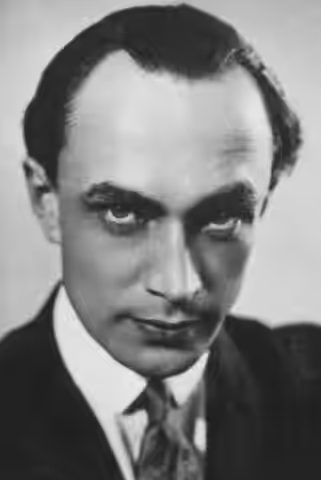
Conrad Veidt made theatrical acting unsettling through the precision of his movements. His Cesare in The Cabinet of Dr. Caligari remains disturbing; the later officer roles show only part of what he could do.
Fi1m perspective
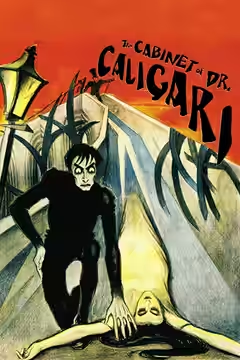
Cesare belongs among the crooked sets of The Cabinet of Dr. Caligari (1920), and that is the first thing to understand about Conrad Veidt. His gaunt face attracts attention, but his eyes and expressive hands keep it. The movements are slow enough for small changes to register, without his having to make everything larger. We were unsettled by him because he gives the exaggerated acting such precision; we cannot simply dismiss it as posing. There is no attempt to make Cesare seem ordinary, and no need for one.
Robert Wiene gives him a setting in which that approach makes sense. Werner Krauss, as Dr. Caligari, plays more broadly, while Friedrich Feher and Lil Dagover can seem to be telling us how distressed to feel. Veidt is more persuasive, and the difference makes the other performances harder to accept. We recommend the film warmly, though the relentless crookedness of its sets sometimes becomes tiresome. Watching Veidt remains rewarding even when we have begun to tire of the scenery around him.
The silent films gave him more to play than menace. In the Hollywood production The Man Who Laughs (1928), he played the disfigured aristocrat Gwynplaine, whose fixed grin put particular demands on an actor so expressive around the eyes. His move into sound did not require him to abandon that theatrical presence. The British fantasy The Thief of Bagdad (1940), with Veidt as Jaffar, gave him another substantial villainous part. Such casting made sense, but the troubled outsiders of the silent films give us good reason to look beyond it when considering his work.
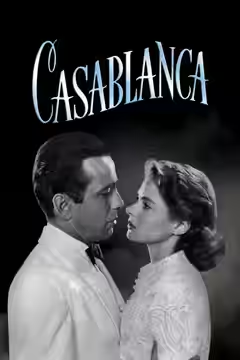
Casablanca (1943) finds him playing Major Heinrich Strasser, one of the officer roles that came to restrict his Hollywood work. We recommend that film without allowances for its age, chiefly for the hurt of its romance and the wit that keeps it moving. It should not, however, be the only film by which we know Veidt. Start with Cesare, and allow a little time to adjust to acting that has no interest in resembling everyday behaviour.
Biography
Conrad Veidt, also credited as Hans Walter Conrad Veidt, was a German actor. Born in Berlin on 22 January 1893, he began his stage career in the city under Max Reinhardt and made his film debut in 1917. He appeared in numerous German silent films, among them The Cabinet of Dr. Caligari (1920) as Cesare and The Man Who Laughs (1928) as Gwynplaine.
After leaving Germany in 1933 with his Jewish wife, Veidt worked in Britain, taking British citizenship in 1938, and later moved to the United States. His later roles included Jaffar in The Thief of Bagdad (1940) and Major Heinrich Strasser in Casablanca (1942). He died of a heart attack in Los Angeles on 3 April 1943.