A journalist turned television writer who sat in some of the best rooms of the last decade, Cord Jefferson has one film of his own so far, and it is sharpest when it is angry about publishing and softest when it goes home.
Fi1m perspective
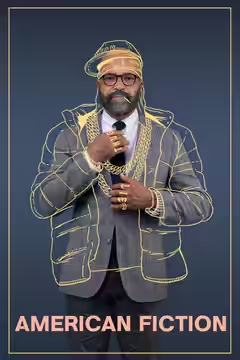
In American Fiction (2023), Monk Ellison sits down to write the novel he despises, and his characters walk into the study and act it out around him, then stop to complain about the dialogue. It is the neatest idea in the film and the clearest picture of what Cord Jefferson does. He takes a grievance he means, that the trade wants one kind of Black book, and delivers it as a gag, and trusts that the gag will hurt more than the speech would have.
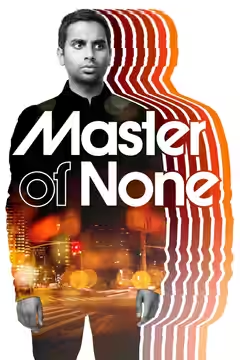
He came to this late and sideways. Jefferson was a journalist first, West Coast editor at Gawker until 2014, and has said he was pigeonholed as a Black writer asked to cover the racism beat. Television took him in the same year with Survivor's Remorse, then The Nightly Show with Larry Wilmore, Master of None (2017), The Good Place, Watchmen (2019) and Station Eleven (2021). Those are good rooms, run by Michael Schur, Damon Lindelof and Patrick Somerville, and we rated all three series highly. What is hard to say is how much of what we admired was his. A staff writer's hand is hidden by design. We can tell you the chalkboard scenes in The Good Place were written by people who had read Kant and still wanted the punchline, and that Jefferson was one of them, and not much more. He co-wrote one Watchmen episode with Lindelof and wrote one of Station Eleven, and that series was at its weakest in its last episodes, when characters explain how the pieces fit, which is a room's fault rather than one writer's.
So the film is where we have to look, and the film is good. Jefferson adapted Percival Everett's Erasure himself and directed it, and the publishing half is sharp: white editors so anxious to be respectful that they cannot hear Monk, an agent relaying offers as if watching a prank become a mortgage, a fugitive author too wanted to give interviews. We laughed a good deal, and then realised the joke was on the people in the cinema, the ones who buy books like Monk's, and that Jefferson had meant it that way from the start. Issa Rae's Sintara Golden, the bestselling author Monk takes for a fool, is the best writing in the script; their long conversation is the one place the film argues instead of hitting targets, and we wanted more of it.
The family half is the trouble. Jefferson expanded Monk's home life from the novel, and those scenes are quiet, plausible and shot like decent television drama, in a different key from the satire. Hilda Rasula cuts cleanly between them, but every kitchen conversation that follows a marketing meeting needs a minute to recover, and the film never finds a way to make the two halves talk. Jeffrey Wright carries both with a scowl, which is more than the script quite earns.
One film is a small sample. Jefferson's next announced project is a limited series of The Corrections, another adaptation, and we would like to see what he does when the argument is not about publishing.
Biography
Cord Jefferson is an American screenwriter and director. After studying at the College of William & Mary, he began his career in journalism, writing for various publications and serving as an editor at Gawker until 2014, before moving into television.
He wrote for series including The Nightly Show with Larry Wilmore (2015–2016), Master of None (2017), The Good Place (2017–2019), Watchmen (2019) and Station Eleven (2021), and worked as a consultant on Succession (2019). For his writing on Watchmen, he received a Primetime Emmy Award. Jefferson made his feature directorial debut with the satire American Fiction (2023), which he also wrote; the film earned him the Academy Award for Best Adapted Screenplay.