In Poland, Daniel Olbrychski was the hero on the horse, trained to fence and ride and fall off things himself. Abroad he has mostly been the man across the desk, and that quieter second career is where we have seen him best.
Fi1m perspective
In The Tin Drum (1979), the scenes we remember best are games of cards. Three adults sit at a kitchen table in Danzig, Agnes between her husband and her cousin, knees touching under the cloth. Daniel Olbrychski is the cousin, Jan Bronski, a Pole at the post office, softer and more frightened than Mario Adorf's grocer across the table. Schlöndorff lets the radio bring Hitler's voice into the kitchen during one of these games and nobody looks up, and Olbrychski's performance is in how carefully he does not. We found ourselves watching him rather than the boy, and in a film built around David Bennent's Oskar that is some achievement.
That frightened postman is not the actor Poland knew. From Rafał Olbromski in Andrzej Wajda's Popioły (1965), Olbrychski spent a decade as the country's hero in the saddle: Azja in Jerzy Hoffman's Pan Wołodyjowski (1969), then Kmicic in Potop (1974), a piece of casting that caused a public row before anyone had seen a frame. He had boxed and fenced at school, trained for the riding and the swordplay, and did his own stunts. Wajda directed him thirteen times, and Olbrychski has called those years "something better than school".
The turn came with Wajda too. Karol Borowiecki in Ziemia obiecana (1975) is hard and cynical, a man the swordsman's admirers were not expecting; Wiktor Ruben in Panny z Wilka (1979) is quieter again, and it is the performance critics cite most often as his finest. Olbrychski has said that when he started out, "my naïve soul thought that I would always act what I feel, that is to say, straightforward and noble characters." The better half of his career began when he stopped.
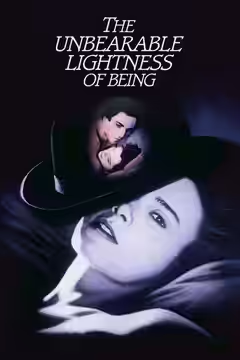
Abroad, from The Tin Drum onwards, he has mostly been the man across the desk: officials, officers, people with a title. In Philip Kaufman's The Unbearable Lightness of Being (1988) he is the Interior Ministry official who asks Daniel Day-Lewis's Tomas about something he once wrote, and the scene is the best stretch of Day-Lewis's performance, the moment the film stops asking him to charm. The actor opposite has something to do with that. There was Janusz in Kieślowski's Dekalog III (1989), films for Nikita Mikhalkov and Claude Lelouch, and the work has carried on into Salt (2010) and Marie Curie (2016).
He is still being cast as the official. Find the man on the horse first, if you can; the postman and the ministry man mean more once you know what he was asked to stop being.
Biography
Daniel Olbrychski is a Polish film and theatre actor. Born on 27 February 1945 in Łowicz, Poland, he made his screen debut in 1964 in Janusz Nasfeter's Ranny w lesie while studying at the Warsaw Drama School.
He is best known for leading roles in several films directed by Andrzej Wajda, including The Promised Land (1975) and The Deluge (1974), in which he played Kmicic. He also appeared as Jan Bronski in Volker Schlöndorff's The Tin Drum (1979).
Olbrychski has worked with directors including Jerzy Hoffman, Krzysztof Zanussi and Claude Lelouch. He has appeared in more than 180 films and television productions, and received the Best Actor award at the 1971 Moscow International Film Festival for The Birch Wood.