Daniel Roher learned in documentaries to sit still and watch a person do a job properly, and he has carried that patience into fiction. We rate his ear above his writing, and his nerve, when he uses it, above both.
Fi1m perspective
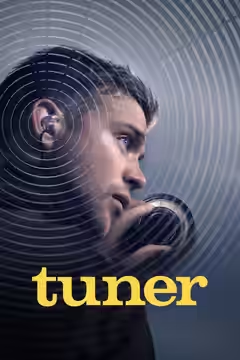
The moment in Tuner (2026) we keep going back to has nothing in it but a hand, a dial and a young man leaning close. Niki White, a piano tuner whose hearing is too sharp for restaurants and subway platforms, is listening to a safe, and Roher takes the rest of the world away so that we hear what he hears: small metal sounds, wheels dropping into place. We realised we had stopped breathing, and nothing on screen had moved. It is the clearest statement so far of what Roher does well, which is to watch somebody work and trust that we will watch too.
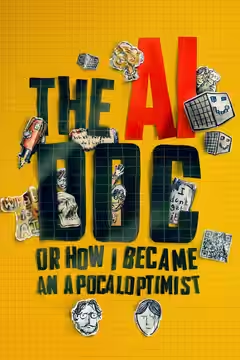
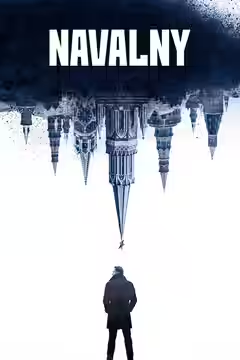
He came to the habit through documentaries, made in Toronto before Once Were Brothers: Robbie Robertson and the Band (2019) found him a wider audience and Navalny (2022) made his name. Navalny worked because Roher knew what he thought and had the nerve to show it. Afterwards, by his own account, "I didn’t feel like making anything." What he made instead was two films at once: Tuner, his first fiction, co-written with Robert Ramsey, and The AI Doc: Or How I Became an Apocaloptimist (2026), co-directed with Charlie Tyrell.
The two share a strength. Roher gets close. In Tuner he puts us inside Niki's head, and Will Bates's score has the sense to stay spare around the safes and let the mechanisms make their own music. In The AI Doc he gets Sam Altman, Dario and Daniela Amodei and Yoshua Bengio in front of the camera, and the stretch with the company chiefs is the best thing in it. They say, more or less on the record, that what they are building could be a catastrophe, then explain why they are building it faster, and Roher lets that sit. For a few minutes the film is properly unsettling.
They share a weakness too. Roher is better at listening than at deciding. Every turn in Tuner arrives on schedule; Lior Raz's Uri is exactly the man with the money such films always have, and the last act is louder and busier than a film about quiet ought to be. It was his first screenplay and his first time directing actors, and the plot shows the strain even while Woodall and Hoffman play it as if nobody had. The AI Doc has the opposite problem: a dozen serious people, a director who agrees with each of them for about four minutes, and a coming baby asked to stand in for a conclusion. Both films leave the arguing to us.
He now says he is balancing documentary and scripted work, which is sensible, since each side has something the other needs. He has the ear. What he has not yet done in fiction is decide what the film thinks before the cameras roll. When he finds a script that deserves his patience, we expect something better than a good evening. Until then, see Tuner in a cinema, where the sound is the point, and do not expect it to surprise you.
Biography
Daniel Roher is a Canadian film director and writer from Toronto. He is known for the documentaries Once Were Brothers: Robbie Robertson and the Band (2019), which opened the Toronto International Film Festival, and Navalny (2022), about the Russian opposition leader.
Roher made his narrative feature debut with Tuner (2025), a crime thriller that he also wrote. The film stars Leo Woodall and Dustin Hoffman. He won the Academy Award for Best Documentary Feature for Navalny.