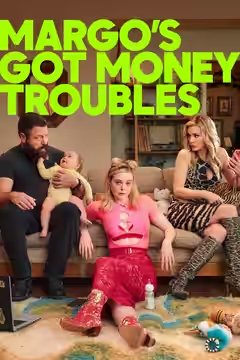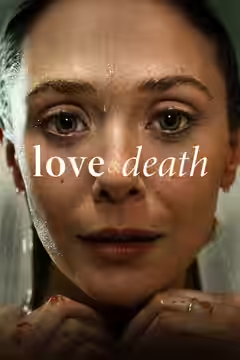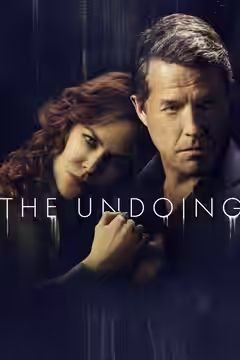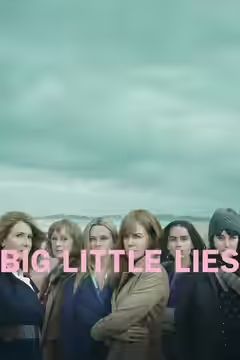
For more than thirty years David E. Kelley has written flawed, talkative, likeable people and then made them stand up in court and deliver his opinions; we rate the people and could do without the speeches.
Fi1m perspective
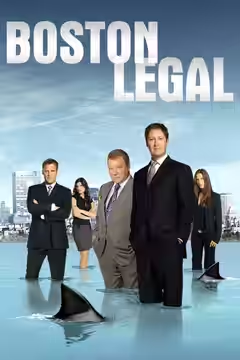
Somewhere in every David E. Kelley series a lawyer stops arguing the case and turns to the jury, and the jury is sitting where we are. In Boston Legal (2004) Alan Shore's closing arguments read like newspaper columns, opposing counsel is handed the weaker brief, and whatever was in that week's papers is entered into evidence. Kelley practised law in Boston before he wrote a line of television, and he has never lost the taste for the summation. It is what makes his programmes his, and it is the thing we like least about them.
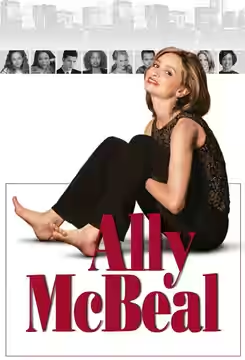
He learned the ensemble on L.A. Law with Steven Bochco in the late 1980s, then set up on his own with Picket Fences (1992), small-town oddity and ethical debate in the same hour. In 1997 he launched both Ally McBeal and The Practice, one fantastical and inward, the other grounded, and wrote most of both himself, in longhand, on legal pads. Boston Legal (2004–2008) spun out of The Practice and stopped behaving like a spin-off almost at once. Then the turn: Big Little Lies (2017), The Undoing (2020) and Margo's Got Money Troubles (2026) are adaptations of novels, shorter, built on someone else's plot.
The people are what works. Kelley has said that "the starting point for each series is to find a character I love", and the love reaches the screen: Shore and Denny Crane with their cigars, Elle Fanning's Margo working out how to feed a child on OnlyFans. Each of them talks like nobody else on television. What does not work is the speech, and the itch to try a topical case whether or not the story wants one. By the second season of Boston Legal we had stopped listening to the closing arguments and were waiting for the balcony, and we felt faintly ungrateful about it, because the nerve of putting the death penalty in front of a comedy audience is real. The women in that series are written first as things for Alan or Denny to look at and only then as lawyers, and the order shows.
The adaptations have done him good. Rufi Thorpe's novel gives Margo's Got Money Troubles a story that never needs a courtroom, and its plain, unbothered interest in how sex work, money and family get in one another's way is the Kelley of Picket Fences with the soapbox taken away. It is our higher score of the two. Its heavier stretches still ask for more attention than they have earned, so the habit is only mostly cured. Give him a book, a director such as Bill D'Elia, who has directed and produced for him repeatedly, and an actor-producer such as Nicole Kidman, who has done three with him, and the speeches get shorter. Leave him alone with a legal pad and they come back.
Biography
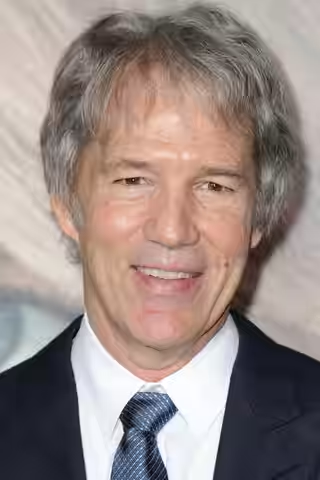
David E. Kelley is an American television writer and producer. Born on 4 April 1956 in Waterville, Maine, he practised law before moving into television in the mid-1980s.
He created the series Ally McBeal (1997–2002), The Practice (1997–2004) and Boston Legal (2004–2008). Other credits include writing Big Little Lies (2017), The Undoing (2020), Nine Perfect Strangers (2021), Love & Death (2023), Presumed Innocent (2024) and the screenplay for the film Lake Placid (1999). He has received multiple Primetime Emmy Awards.
Kelley is married to actress Michelle Pfeiffer. He created and wrote the 2026 Apple TV+ series Margo's Got Money Troubles, marking their first professional collaboration.