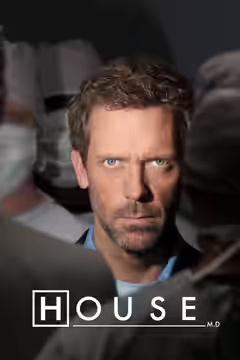
David Shore is good at making a medical puzzle tell us something about the doctor solving it. We rate his sour humour, but House too often asks us to keep hoping its unhappy lead will change.
Fi1m perspective
A patient needs an answer, and Gregory House makes finding it uncomfortable for everyone around him. In House (2004), David Shore ties the pleasure of solving a medical puzzle to the difficulty of spending time with the doctor solving it. Hugh Laurie is crucial here, making the intelligence entertaining without excusing the manners. We winced at House’s behaviour because Laurie makes his unpleasantness felt even when we want to hear his next deduction. The cases give us a reason to return, though the friendship and sour humour last better than some of the medical mysteries.
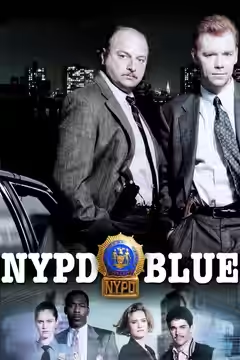
Shore’s earlier writing credits include Law & Order (1990) and NYPD Blue (1993). We warmly recommend the latter for its cast and writing, especially Dennis Franz as Andy Sipowicz, without attributing a collective achievement to one writer. Creating House gave Shore a series to run across eight seasons. His collaborators there included writer-producer Lawrence Kaplow and writers Garrett Lerner and Russel Friend. The achievement is clearest when a patient’s case raises questions about truth and lying, so that the medical problem gives the characters something worth arguing about.
Shore’s Three Stories (2005) episode interweaves three patient narratives and shows how carefully he can arrange a medical mystery. Yet House also exposes the limit of building so much around a man’s resistance to change. Over eight seasons, the repeated returns to his unhappiness become tiring, especially when the writing has encouraged us to expect something different. A recurring case structure is reasonable enough in a procedural, and the cases remain worth following. The personal stories need more freedom than Shore’s series regularly allows them.
With The Good Doctor (2017), Shore adapted a South Korean series about an autistic surgical resident, returning to medicine and a socially unconventional lead. We would still start with House, where Laurie gives Shore’s difficult doctor both the wit and the discomfort the writing needs. Stay for the cases and the sour humour; expecting lasting personal improvement is likely to make it a longer evening.
Biography
David Shore is a Canadian television writer, producer and director. He was born on 3 July 1959 in London, Ontario, and trained as a lawyer before moving into television writing in the 1990s.
Shore wrote episodes of NYPD Blue (1993), Law & Order (1990), Due South (1994) and The Practice (1997). He created the medical drama House (2004), on which he also wrote, produced and directed episodes, including the Emmy-winning "Three Stories". He later created or co-created Battle Creek (2015), Sneaky Pete (2015) and The Good Doctor (2017).