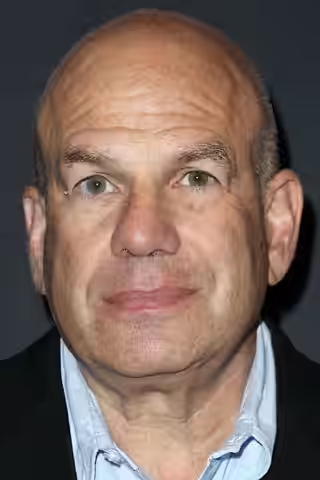
David Simon makes the routines of work absorbing, giving professional loyalties and compromised decisions the attention usually reserved for gunfire. We rate him highly, though the repeated failures can wear us down.
Fi1m perspective
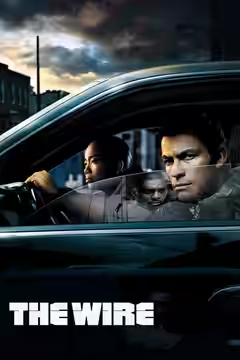
In The Wire (2002), getting something done means finding out who can authorise it and who would rather it quietly went away. David Simon and Ed Burns make that business absorbing because the people involved have jobs and ambitions we can understand, on either side of the law. We recommend it even to those who have little patience for police dramas. It asks us to learn how the work is done, and uses that knowledge to make each obstruction matter.
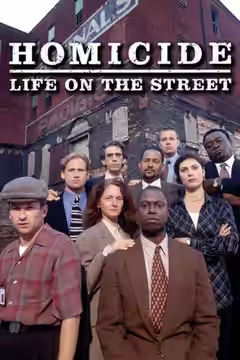
Simon’s reporting supplied the material for his early television work on Homicide: Life on the Street (1993), based on his book. By The Wire, he was writing about Baltimore’s ports, schools and media as well as its police and drug trade. That appetite for detail gives the characters convincing reasons to accept arrangements they know are bad. Across five series, though, their repeated compromises sometimes leave too little room for surprise. We occasionally sense the futility before the people in a scene have had a chance to struggle against it.
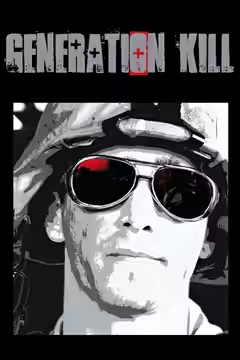
Generation Kill (2008), adapted with Burns from Evan Wright’s book, brings the same attention to Marines during the early invasion of Iraq. We laughed at their banter and then felt uneasy, because the jokes had made their closeness appealing without making the ugly language any less ugly. Alexander Skarsgård’s restrained Brad Colbert gives us someone to follow through the talk, while James Ransone’s Josh Ray Person is allowed to be funny and irritating. Directors Susanna White and Simon Cellan Jones let boredom, fear and camaraderie coexist without signalling every shift. The military language is tiring, and the narrow view cannot explain the whole invasion, but the time spent on boredom and routine makes these men worth following.
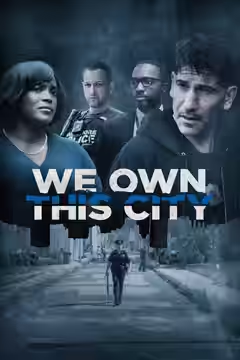
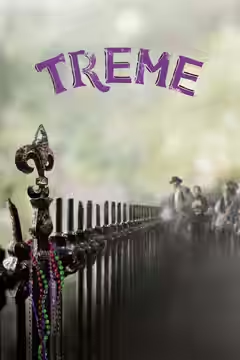
With Eric Overmyer, Treme (2010) takes his interest in working communities to the musicians of post-Katrina New Orleans. Later collaborations include We Own This City (2022), with George Pelecanos, continuing a career built around ensembles and shared writing. Start with The Wire, but choose an evening when nobody needs to keep checking their phone.
Biography
David Judah Simon is an American author, journalist, screenwriter and producer. He worked for the Baltimore Sun city desk for twelve years from 1982 to 1995. He wrote the non-fiction book Homicide: A Year on the Killing Streets (1991) and co-wrote The Corner: A Year in the Life of an Inner-City Neighborhood (1997) with Ed Burns.
Simon adapted the former into the NBC series Homicide: Life on the Street (1993–1999), on which he served as writer and producer. He adapted the latter into the HBO mini-series The Corner (2000). He is the creator, executive producer, head writer and showrunner of the HBO series The Wire (2002–2008).
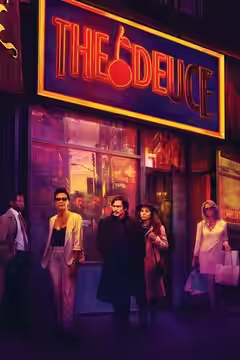
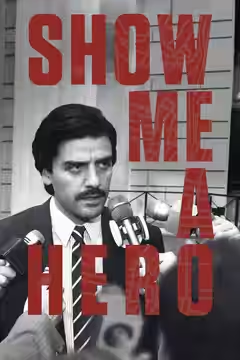
Simon adapted Generation Kill into an HBO mini-series (2008) and created the HBO series Treme with Eric Overmyer (2010–2013). He wrote the HBO mini-series Show Me a Hero (2015) with William F. Zorzi and created The Deuce (2017–2019) with George Pelecanos. He was awarded a MacArthur Fellowship in 2010.