Bellisario has spent nearly fifty years making American television about men who served, came home and stayed useful. The plots are often daft and the formula has barely moved since 1980; the people at the centre of it are written with a care that keeps the programmes on air.
Fi1m perspective
A body turns up on or near a base. Somebody with a rank and a past is sent for. He is polite, competent, faintly amused by the civilians, and the war he came back from has left him steadier rather than damaged. That is the Bellisario hero, and he has been on American screens in one uniform or another since Black Sheep Squadron in 1976. The cases change. He does not.
The career has a plain shape. Four years in the Marines, then advertising until 1976, then Hollywood at forty, where Stephen J. Cannell took him on for Black Sheep Squadron and he moved from there to the original Battlestar Galactica (1978) and a spell writing for Kojak. Then he started building his own. Magnum, P.I. (1980) with Glen A. Larson, Airwolf (1984), Quantum Leap (1989), JAG (1995) and NCIS (2003) with Don McGill, with Deborah Pratt writing and producing alongside him on several of them. He made one film for cinemas, Last Rites (1988), and never made another. He stepped back from NCIS around 2007 and it carried on without him, which says how well the machine was built.
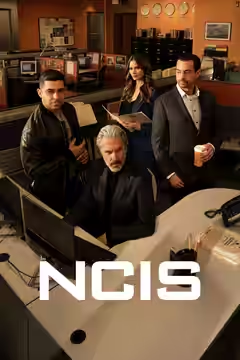
What he does well is the veteran. Magnum put a Vietnam serviceman on primetime who was not a killer or a casualty but a man with friends, a car he did not own and a sense of humour, and Bellisario has said he prefers "stories that can only happen within the military environment or the military justice system." That is the whole project in a sentence. Quantum Leap showed he could set strict rules for a high concept and keep them week after week. And NCIS, with its overlapping dialogue and grainy black-and-white flashbacks, is quicker on its feet than a naval procedural has any right to be. We have sat through episodes whose plots we could not have repeated ten minutes later and did not mind, because Gibbs across a table from someone who is about to say too much is a scene worth waiting for. We gave it 66 and that is where it belongs: as good as this kind of thing gets without becoming something else.
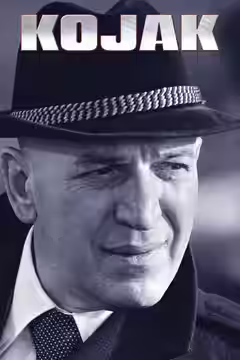
What he does less well is surprise. JAG and NCIS run on the same rails, and after the first season of either you can set your watch by the autopsy. The military setting that gives his stories their particular texture also fences them in; the same handful of situations comes round again and again. Our Kojak review does not single out his contribution, and that is about right for the apprentice years.
He is executive producer on the 2022 Quantum Leap revival, nearly half a century after his first credit. The body is still found near the base and the man with the rank still gets the call. We would not bet against another twenty years of it.
Biography
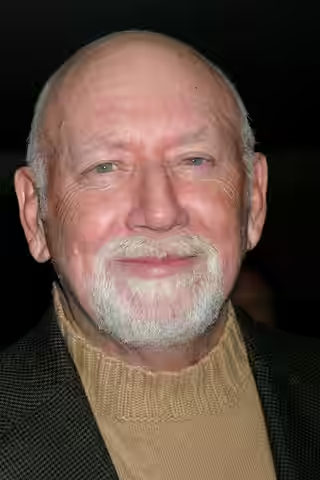
Donald P. Bellisario is an American television producer and screenwriter. Born on 8 August 1935 in Cokeburg, Pennsylvania, he served in the United States Marine Corps from 1955 to 1959, reaching the rank of sergeant. He earned a bachelor's degree in journalism from Pennsylvania State University in 1961 and worked for fifteen years in advertising before moving to Hollywood.
Bellisario began his television career as a writer on series including Kojak (1973). He went on to create or co-create Magnum, P.I. (1980), Airwolf (1984), Quantum Leap (1989), JAG (1995) and NCIS (2003). His shows frequently feature military veterans as characters, drawing on his own service experience. He has also written and produced episodes of Battlestar Galactica (1978) and directed the feature film Last Rites (1988).