A barnstorming actor-manager who took Lear to the provinces at popular prices, Donald Wolfit came to film late and used it to pay for the stage. The screen got the sternness without the grandeur, and in Room at the Top that was exactly enough.
Fi1m perspective
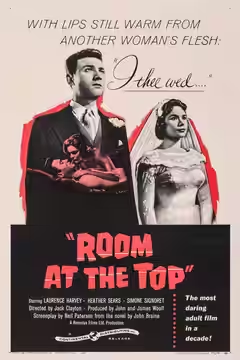
In Room at the Top (1958) Mr Brown owns the factory, and his daughter Susan comes with the life Joe Lampton wants. Wolfit plays Brown as a man who buys people and says so to their faces. There is no purr in it and nothing held back for a later scene; he names the price and waits. In a film about a town's money spending its Tuesday nights at the amateur dramatic society, it is the least theatrical thing on screen, and our attention went to him whenever Laurence Harvey's vowels began to wander.
That is a strange thing to say about Donald Wolfit, who was a barnstormer by trade. He began with the touring companies of Charles Doran and Fred Terry in 1920, made his London debut in 1924, joined the Old Vic in 1929 and Stratford for 1936 and 1937, and in 1937 set up his own touring company. He ran it through the war, playing Shakespeare at lunch-time to whoever could get there, and took Lear and Richard III round the provinces at popular prices for years afterwards, on economical productions. His Lear was, by reputation, enormous. We have to take that on trust, because it is gone, and we are reviewing what is left.
What is left is film, and film was never the point for him. The parts he took from the 1950s paid for the tours: a lead in Svengali (1954), then a run of stern men in good pictures, industrialists and officers. After Brown came General Murray in Lawrence of Arabia (1962) and Bishop Folliot in Becket (1964). They are supporting parts, and he plays them without reaching for the back of the stalls. The screen took his authority and had no use for his size, and he seems to have understood that better than most stage actors of his generation.
There is a dryness to it. His touring productions were criticised for weak supporting casts and cheap scenery, which is the actor-manager's economy: one large performance in the middle and everything else as it can be afforded. In the cinema he was the supporting cast, and he did the job properly. We disliked Brown at first sight and trusted the film more for it, because Wolfit never asks to be forgiven and never seems to notice that he might need to be.
Lawrence we would send anyone to, but not for him; he is one face in a very large picture. Start instead with Room at the Top, where he has scenes rather than moments, and watch what he does not do. The Lear will have to remain a rumour.
Biography
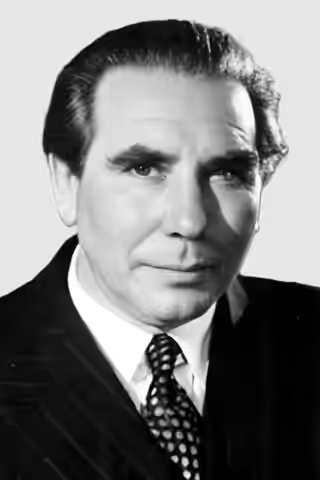
Donald Wolfit was an English actor and actor-manager. Born Donald Woolfitt on 20 April 1902 in New Balderton, Nottinghamshire, he made his London stage debut in 1924 and later simplified the spelling of his surname. He appeared in seasons at the Old Vic and the Shakespeare Memorial Theatre before establishing his own touring company in 1937, taking Shakespeare productions around Britain and overseas.
Wolfit appeared in numerous films from the 1930s onwards. His screen credits include Mr Brown in Room at the Top (1959), General Murray in Lawrence of Arabia (1962), Bishop Folliot in Becket (1964) and 'Macbeth' in The Charge of the Light Brigade (1968). He was knighted in 1957 and died on 17 February 1968 in Hammersmith, London.