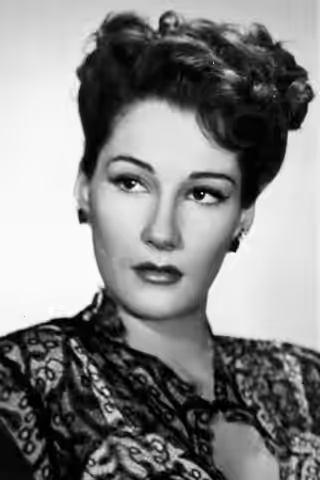
Doris Dowling made a whole life out of three or four bar-room scenes in The Lost Weekend and Hollywood decided that was all she was for. Italy briefly thought otherwise. The best of her is small, low-voiced and not asking for pity.
Fi1m perspective
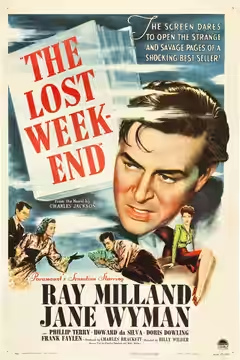
Gloria sits at Nat's bar in The Lost Weekend (1945) waiting for Don Birnam to take her out, as he keeps promising and never does. Doris Dowling has three or four scenes and does not once play her as a victim. The voice is low, the delivery clipped, and under it there is a hope she would rather we did not notice. Every time Don came through the door with a new excuse we wanted her to walk out, and the reason we wanted it is that Dowling let us see she never would. It is still the first thing we think of when her name comes up.
It was the beginning and, in Hollywood, very nearly the end. She had come from the Broadway chorus, in musicals such as Panama Hattie (1940), and followed her sister Constance west. Wilder saw the part in her before anyone else did. She remembered the novelist Charles Jackson saying over lunch that it was too bad she wasn't a more common type so that she could play Gloria, "And Billy never even looked up. He just said, 'She is.'" The studios took him at his word. Husky voice, dark hair, the woman at the bar, the wife who has been elsewhere: The Blue Dahlia (1946) gave her Helen Morrison, the faithless wife of Alan Ladd's character, and after that the parts got smaller and the pictures cheaper, The Crimson Key (1947) among them.
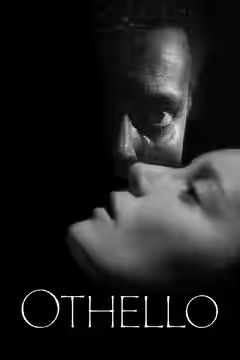
So she left. In 1947 she went to Italy with her sister and found, in the neorealist cinema, work Hollywood had not thought to offer. Bitter Rice (1949), for Giuseppe De Santis, cast her as Francesca, a gangster's moll who goes to work among the women in the rice fields and is changed by the labour. It is the role most often set beside Gloria, and for the same reason: a hard woman with something soft underneath, played without pleading. Then Welles took her on as Bianca in Othello (1951), shot in pieces across Italy and Morocco and dubbed like everything else in it. We admire that film; we cannot honestly say any of it is hers.
She was back in America around 1952, and for the next thirty years she was mostly on television, guesting in westerns and detective series, with the occasional film such as The Car (1977). The momentum she had in 1945 never returned, and nobody in either country seems to have worked out what to do with her second act.
Watch The Lost Weekend for her. It is the film we can vouch for, and she is the part of it nobody was asked to notice.
Biography
Doris Dowling was an American actress of film, stage and television. Born in Detroit, she grew up in New York City and began her career as a chorus girl on Broadway before following her elder sister Constance to Hollywood.
Her first credited film role was as Gloria in Billy Wilder's The Lost Weekend (1945). She next appeared in The Blue Dahlia (1946). Post-war opportunities declined, and she moved to Italy, where she starred in Bitter Rice (1949) and played Bianca in Orson Welles's Othello (1952).
Returning to the United States, Dowling worked mainly in theatre and on television, with appearances in series including Alfred Hitchcock Presents, Bonanza, The Andy Griffith Show and The Incredible Hulk. In 1973 she shared an Outer Critics Circle award for a Broadway revival of The Women. She died in Los Angeles in 2004.