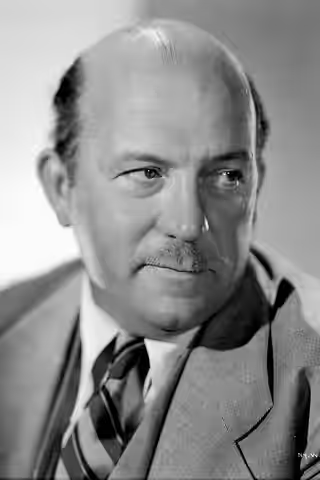
Edgar Kennedy made a career out of the moment before a man loses his temper. The slow burn, hand over the bald head and down across the face, was his whole instrument, and it is a finer one than the small parts around it usually deserved.
Fi1m perspective
A hand goes up over a bald head, drags down across the face and stops at the chin. Nothing has been said. Everyone watching knows what is coming, and Edgar Kennedy makes them wait for it. This is the slow burn, and he performed it for close to forty years, as harassed householders, dim policemen and hotheads in short comedies and features. It is a small trick. He made it look like a whole personality.
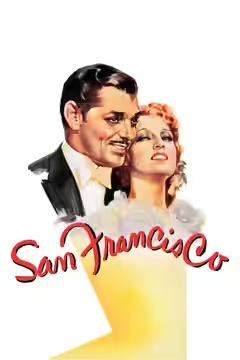
He started in 1911 as one of the original Keystone Cops for Mack Sennett and turned up in the early Chaplin comedies, among them Tillie's Punctured Romance (1914). In the 1920s he was at Hal Roach, supporting Laurel and Hardy and directing two of their shorts, and it was there that the routine took its shape. From 1930 he starred in RKO-Pathe's Average Man series, roughly a hundred shorts over seventeen years with Florence Lake as his wife, domestic comedy before television existed to house it. Each one ends in his defeat and a burn straight to camera. In between came supporting parts in big pictures: Twentieth Century (1934), San Francisco (1936), A Star Is Born (1937) and Unfaithfully Yours (1948), the last in the year he died.
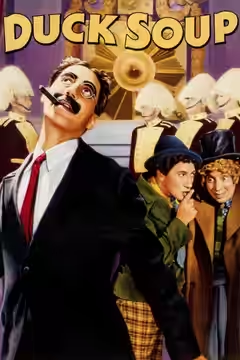
The best of him is in Duck Soup (1933), where he sells lemonade and Harpo and Chico Marx will not leave him alone. The Marx Brothers move constantly; Kennedy stands still, and the stillness is the joke. We laughed at the length of the pause before the eruption, and then felt for him, which is the point. The burn only lands if we half believe the man has a grievance, and Kennedy always did. He said himself in 1938 that in the old days, if you didn't act it, nobody knew what it was supposed to be, and that with sound you could get by without acting at all. He never got by. Every grievance is played out on the face before a word arrives.
The trouble is that the pictures knew exactly what he was for and asked for nothing else. He wanted to play heavies and drama, and stayed in farce. In San Francisco he is the Sheriff, in a film we gave 71, and our review found Gable, Tracy and the earthquake to talk about and did not find him; that is roughly what the features did with him too. A man with a badge and two lines does not have time to burn.
See him in the shorts and with the Marx Brothers, where he has a whole scene to lose his temper in. In the big pictures he is furniture, well made and easily missed.
Biography
Edgar Livingston Kennedy (1890–1948) was an American comedic character actor who appeared in hundreds of films across the silent and sound eras. He began his screen career in 1911 and worked with comedians including Charlie Chaplin, Laurel and Hardy, and the Marx Brothers. Kennedy was known for his 'slow burn' routine, in which his characters' exasperation built gradually, often accompanied by rubbing his hand over his bald head.
He is credited as the Street Vendor in the Marx Brothers film Duck Soup (1933). Kennedy appeared in numerous Hal Roach productions and other studio comedies, frequently playing hot-tempered policemen, businessmen or blue-collar workers. He also directed two Laurel and Hardy shorts and starred in his own series of domestic comedy shorts for RKO.