Eric Portman played men who were certain of something they should not have been, and played them straight. Hirth in 49th Parallel made him a star; the coldness that frightened us there kept him from the conventional leading parts and made him worth watching.
Fi1m perspective
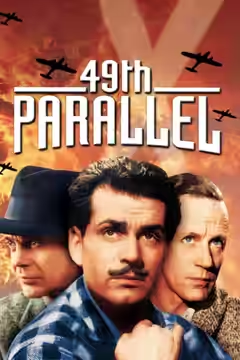
Hirth walks into the trading post in 49th Parallel (1941) and, for a minute, does nothing. He stands by the stove with his men while the Factor and the trapper look at the guns, and then he begins to quote the Führer at two people who would rather have their supper. We were frightened for them both before anyone had raised a hand, and it was Portman who did it: the stillness, the thin mouth, the certainty that he is the only reasonable man in the hut. Powell and Pressburger's film is episodic and broad in places, and he is the reason it holds. He never plays the Nazi as a fool. He plays him as a competent man who believes every word, which is worse.
The voice is polished and slightly reedy at once, with a grit underneath, and it makes a lecture sound like a threat. It had been trained on the stage since 1924, at the Old Vic and in Shakespearean repertory, and it reached the screen in 1933 in small parts. Hirth made him a star at forty. Powell and Pressburger brought him straight back the next year on the other side, as Tom Earnshaw in One of Our Aircraft Is Missing (1942), and then gave him Thomas Colpeper, the Kentish magistrate in A Canterbury Tale (1944), the part many people reach for first when his name comes up. Three films with those two directors are the spine of the career.
What the 1940s asked of him, again and again, was a man with something to hide. The cashiered officer, the struck-off doctor, the blunt Yorkshireman who says the thing nobody wants said: these were his parts, and he did them without asking for sympathy. The pattern ran on into the 1950s, with Colonel Richmond in The Colditz Story (1955) and Miller, the discredited doctor of The Deep Blue Sea (1955), and he was at his best when set against one other actor and left to argue, as in The Spider and the Fly (1949). Lance Comfort directed him three times; Powell and Pressburger, three times.
The complaint is that he was cold, remote, not a leading man as the period understood one, and that it kept him from the widest kind of fame. We think that is a fair description and a poor complaint. British wartime cinema had plenty of warmth; it was short of men who could make a villain frightening by being right in his own head, and Portman supplied it. Coldness is a skill when it is used deliberately, and his was.
He said once that "an actor should merely regard himself as a parcel of stuff; you either sell it or you don't." It undersells the goods. Start with the hut on Hudson Bay, and watch how long he can stand by a stove before anybody feels safe again.
Biography
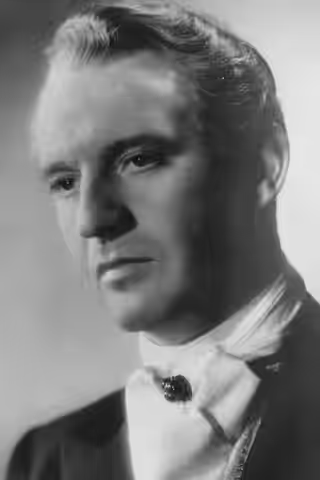
Eric Portman (13 July 1901 – 7 December 1969) was an English stage and screen actor. Born in Halifax, West Riding of Yorkshire, he began his career on stage in the 1920s and made his film debut in the mid-1930s.
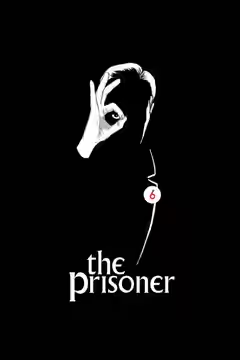
He is known for roles in several Powell and Pressburger films of the 1940s, including 49th Parallel (1941) as Lieutenant Hirth, One of Our Aircraft Is Missing (1942) as Tom Earnshaw and A Canterbury Tale (1944) as Thomas Colpeper. Other notable film appearances include The Colditz Story (1955) as Colonel Richmond, Freud: The Secret Passion (1962) as Dr Theodore Meynert and The Bedford Incident (1965) as Commodore Wolfgang Schrepke. He also appeared as Number Two in the 1967 television series The Prisoner.
Portman received a Tony Award nomination for Best Actor in a Play for his performance in Separate Tables.