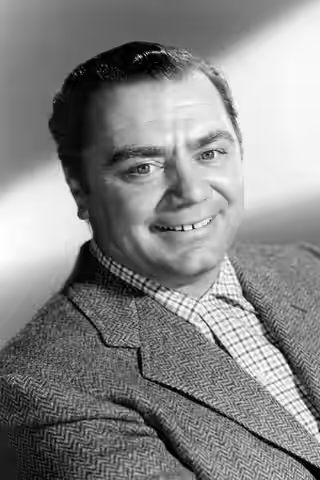
Borgnine's weapon was the smile: wide, gap-toothed, and no guarantee of anything. He made his name frightening people with it and spent the rest of his career showing it could be kind, and both halves are worth your evening.
Fi1m perspective
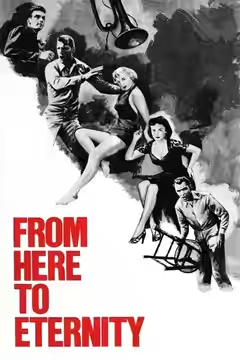
The most frightening thing Ernest Borgnine ever did on screen was play the piano. In From Here to Eternity (1953) his Sergeant Judson runs the stockade and plays in the club, and on the night Frank Sinatra's Maggio objects to the music he does not shout. He smiles, picks up a bottle, and the men around him go quiet. We did not move, and we have since worked out why: nothing in his face changes between the tune and the threat, so it is the smile you learn to fear.
He came to it late. He was in the Navy until 1945, reached Broadway in 1949 and films in 1951, and the studios looked at the build, the gap in the teeth and the gravel in the voice and saw a heavy. For a while that was all he was allowed to be, and Judson was the part that made his name. Then came Marty (1955), a lead as a lonely butcher, gentle and unsure of himself, and it turned out the man who had picked up the bottle could play someone who would never dream of it. We have not reviewed it, so we will say only that it changed what people thought he was.
It did not change what he was offered for long. After Marty he went back to the crowd: Dutch Engstrom in Sam Peckinpah's The Wild Bunch (1969), Mike Rogo in The Poseidon Adventure (1972), tough supporting men in war films and ensembles, and on television four years of McHale's Navy (1962–66), where the Navy years became a sitcom, and later Airwolf (1984–86). What he brought to these was ease. Most hard men on screen are working at it. Borgnine gave the impression he had been hard before breakfast and had since relaxed, and the relaxed voice is what made him useful in a crowd: he could be the one who was not frightened.
He kept going, into voice work for SpongeBob SquarePants and small film parts, until he died in 2012. He is in Gattaca (1997), as Caesar, in a part so small our review did not mention him; he was eighty and still turning up. He said, late on, "I'm still learning how to act, for god's sake," and we believe him. It is not the sentence of a man coasting.
The complaint against him is fair and it is Hollywood's fault more than his: he could do two things, the brute and the soft man, and the industry mostly asked for the first. Start with the stockade. Then watch Marty and see whether you believe the same man did both. It took us a while.
Biography
Ernest Borgnine (born Ermes Effron Borgnino) was an American actor. Born on 24 January 1917 in Hamden, Connecticut, he died on 8 July 2012 in Los Angeles, California. His career spanned more than six decades, beginning with film roles in the early 1950s.
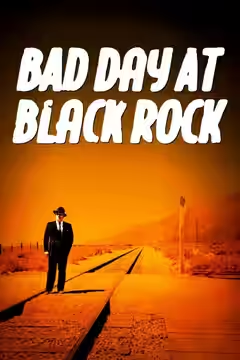
He played supporting parts in films including From Here to Eternity (1953), Bad Day at Black Rock (1955) and The Wild Bunch (1969). Borgnine won the Academy Award for Best Actor for his lead performance in Marty (1955). On television he starred as the title character in the sitcom McHale's Navy (1962–1966) and co-starred in Airwolf (1984–1986).
Later credits included voice work as Mermaid Man in SpongeBob SquarePants (1999–2012) and roles in Gattaca (1997) as Caesar, Small Soldiers (1998) and RED (2010). He received a Primetime Emmy Award nomination in 2009 for his appearance in the series finale of ER.