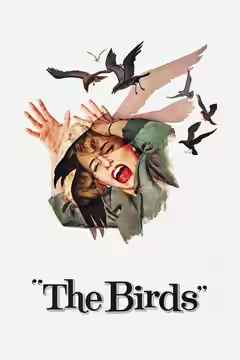
A stage actress for more than eighty years who spent three decades in Hollywood playing landladies, aunts and housekeepers, usually in a scene or two, and who in one of them, the diner in Hitchcock's The Birds, gave a small perfect comic turn.
Fi1m perspective
The best thing Ethel Griffies did on screen takes a few minutes. In the diner in Hitchcock's The Birds (1963), her Mrs. Bundy, an amateur ornithologist, informs a room of frightened people that birds do not do this, and she has the facts to prove it. Everyone in the cinema has already seen what the sparrows did, and she has not, and Griffies plays the gap without a wink or a raised eyebrow. We laughed at her, then felt slightly ashamed of it, because she is the one person present arguing from evidence and the film has arranged for the evidence to be wrong. We called it a small perfect comic turn and we stand by both adjectives.
It was the sort of part she had been given for thirty years. She was on stage from around 1881, carried on as a child by her actor parents, made her London debut in 1899 and her Broadway debut in 1924, and did not properly arrive in films until 1930, repeating a stage role in Old English. By then she was past fifty, and Hollywood knew exactly what to do with a woman past fifty: landladies, aunts, housekeepers, often uncredited. She was the landlady in Waterloo Bridge (1940), having done much the same in the 1931 version, and Grace Poole in Jane Eyre (1943), a part she had also taken in 1934. She appeared eight times with C. Aubrey Smith, which tells you the company she kept and the size of the rooms she was kept in.
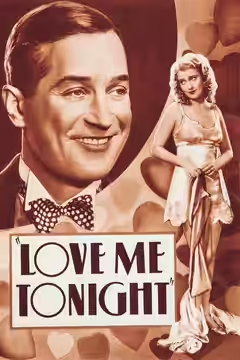
The parts were small and she knew it. Hollywood, she said in 1951, meant "good money, little satisfaction and a great yearning for the stage", and she kept going back to the theatre between films, well into her eighties. Our own review of Love Me Tonight (1932), in which she is one of the aunts, does not mention her at all, and that is a fair account of most of her screen work. She is in the frame, she is exactly right, and the film is about somebody else.
What she could do was say a line so that it landed, and hold a face that suggested she had opinions about you. The casting directors saw crotchety and eccentric old women, some of them with a soft centre, some with a hard one, and she gave them what they asked for and a little more. In 1963, at eighty-five, she did two of them: Mrs. Bundy, and Grandma Florence in Billy Liar. She retired from the stage in 1967 at around eighty-nine and died in 1975 at ninety-seven.
The theatre got most of her, which was what she wanted. The screen got her a few minutes at a time. Watch The Birds for Tandy, as we said at the time, and do not leave the diner early.
Biography
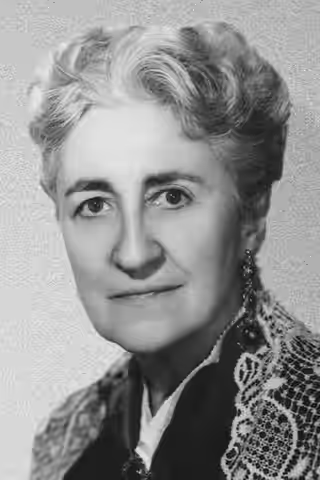
Ethel Griffies (born Ethel Woods) was an English actress of stage, screen and television. The daughter of actor-manager Samuel Rupert Woods and actress Lillie Roberts, she began her career on stage at the age of three and made her London debut in 1899. She later appeared on Broadway from 1924 and continued working in theatre until 1967.
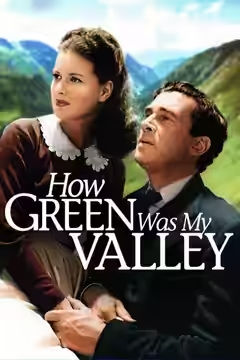
Griffies appeared in around 100 films and television productions from the 1930s onwards, often in supporting roles. Her credits include Love Me Tonight (1932) as Second Aunt, How Green Was My Valley (1941), Jane Eyre (1943) as Grace Poole, Billy Liar (1963) as Grandma Florence and The Birds (1963) as Mrs Bundy. She died in London in 1975.