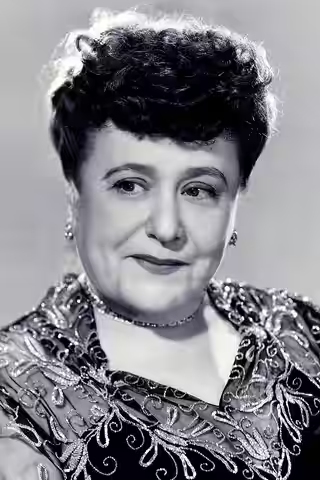
A late starter who spent thirteen years playing the rich, loud American woman nobody at the table wanted to sit next to. She did it with real bite, and the films rarely gave her the chance to do anything else.
Fi1m perspective
She arrives already talking. That is the Florence Bates entrance in most of the sixty-odd films she made: a large woman in expensive clothes who has decided the room is hers, addressing the waiter, the guests and the heroine in the same carrying voice. She was cast again and again as the dowager, the socialite, the gossiping landlady and the overbearing matron, and most often as the vulgar American loose among people with better manners. The joke was usually on her. She made sure it was a good one.
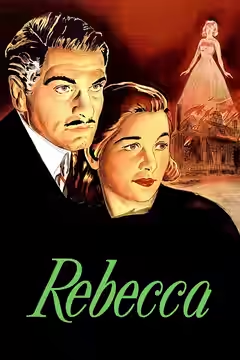
She came to it late. Bates had studied mathematics, taught school and practised law in Texas, and had worked in radio and run an antique shop, before money troubles took her to California and the Pasadena Playhouse in the mid-1930s. She was 52 when Alfred Hitchcock cast her as the demanding Mrs Van Hopper in Rebecca (1940), and the part fixed her for good. She is not in the film for long. We were relieved when Rebecca left her behind, and a reel later we caught ourselves missing her, because once she has gone there is nobody left in it who says what they think out loud.
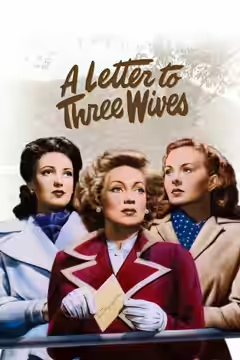
What followed was more than sixty pictures in thirteen years, and a great many of them wanted the same woman. She is the gossipy landlady in Portrait of Jennie (1948) and Madame Dilyovska in On the Town (1949). In Joseph L. Mankiewicz's A Letter to Three Wives (1949) she is Mrs Manleigh, the radio sponsor whose dinner is the hinge of the film's sharpest story; it is her table at which Kirk Douglas makes his speech about what radio advertising does to the people who listen to it, and the story turns on how that evening goes. It is a small part. It is also the kind of part she could play in her sleep, and the trouble with a career like hers is that the studios kept letting her.
She could do more than one thing inside the type. I Remember Mama (1948) gives her a respected literary figure, Florence Dana Moorhead, and lets her be kindly rather than crushing, and it is a pity so few films asked for that. Her strength was verbal: the timing of a rude remark, the pause before the dismissive one, the sense that this woman had been getting her own way for forty years and saw no reason to stop. Directors used her to make a scene scratch. They seldom used her to make one hurt.
In Saratoga Trunk she gets a line that a retrospective later held up against her own life: "I live by my wits. It’s a grand feeling." It was written for the character. It happened to be true of the woman saying it.
Biography
Florence Bates, also credited as Florence Rabe, was an American character actress. Born in San Antonio, Texas, she graduated from the University of Texas at Austin with a degree in mathematics and later became one of the first female lawyers in Texas. After working in radio and running a bakery in Los Angeles with her husband, she began acting in the mid-1930s at the Pasadena Playhouse, adopting her professional name from her first stage role.
Bates made her screen debut in Alfred Hitchcock's Rebecca (1940) as Edythe Van Hopper. She appeared in more than sixty films over the following thirteen years, including The Devil and Miss Jones (1941), Heaven Can Wait (1943), The Secret Life of Walter Mitty (1947), I Remember Mama (1948), A Letter to Three Wives (1949) and On the Town (1949). She also had television roles, including a guest appearance on I Love Lucy (1951). She died on 31 January 1954.