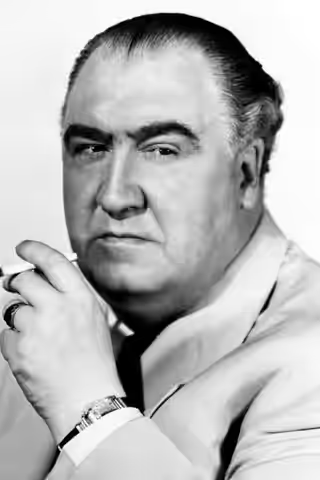
Francis L. Sullivan was the heavy man in the good suit whom British films of the 1930s and 40s reached for whenever the law, the parish or the bank needed a face. He was most at home in Dickens, and he never asked to be liked.
Fi1m perspective
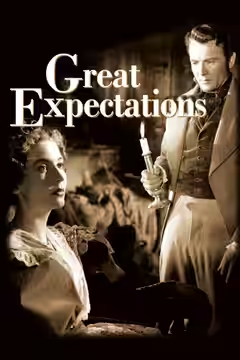
The voice arrives first, low and slightly peppered, and then the rest of him fills the doorway. Francis L. Sullivan was a big man with a famous double chin, and he did not try to hide either fact from the camera. He was cast as lawyers, officials and beadles because he looked like the sort of person who could refuse you something, and he played them without softening: as Mr Jaggers in Great Expectations (1946) he has, as we said in our review, the firmness to hold our attention without demanding our affection. That is a harder trick than it sounds. Most character actors want you on their side. Sullivan wanted you slightly afraid of him, and usually got it.
He came up on the stage, at the Old Vic in Richard III when he was eighteen, and did not make a film until The Missing Rembrandt in 1932. Through the 1930s and 1940s he was a fixture of British pictures, and the studios kept finding Dickens for him: Jaggers twice, Mr Bumble in Oliver Twist (1948), Crisparkle. From the late 1940s he was in Hollywood as well, playing Pierre Cauchon in Joan of Arc (1948) and Philip Nosseross in the film noir Night and the City (1950), which we have not reviewed but which is where many people first notice him.
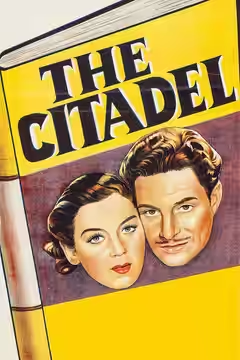
He was better in company than alone, and best when the director around him was good. In The Citadel (1938) his Ben Chenkin is one of the reasons the Welsh valley feels lived in rather than built; he does not have much to do, and he does not do too much with it, which is exactly right for a film that wants its village to look ordinary. Under David Lean, who used him twice, he gets more room and uses it. We found, going back to Great Expectations, that Jaggers was the character we most wanted back in the frame, because whenever Sullivan is on screen the film stops being a costume piece and becomes a place where a boy might actually come to harm. The weight of him and the flatness of the voice do it; he says the terrible things about Pip's prospects as if reading out a bill.
The reservation about him is a small one and it is really a reservation about the industry: he was almost never given a lead. Nobody built a film around that face, and it is not obvious what the film would have been. He knew the limits of the trade. "A good director can force almost anyone to act," he told an interviewer in 1950, which is a modest thing for a man who did not need forcing to say.
Start with Great Expectations, where Lean puts him in the frightening half of the story and lets him stay there. Then The Citadel, for the pleasure of watching him do very little and do it precisely.
Biography
Francis L. Sullivan (6 January 1903 – 19 November 1956) was an English film and stage actor. He was born in Wandsworth, London, and attended Stonyhurst, a Jesuit public school in Lancashire. He made his stage debut at the Old Vic at the age of 18 in Shakespeare's Richard III and appeared in his first film, The Missing Rembrandt, in 1932.
Sullivan is known for his roles in several adaptations of Charles Dickens, including Jaggers in both the 1934 and 1946 versions of Great Expectations, Mr Bumble in Oliver Twist (1948), and Crisparkle in The Mystery of Edwin Drood (1935). Other notable film roles include Philip Nosseross in Night and the City (1950) and Pothinus in Caesar and Cleopatra (1945). He also appeared in Joan of Arc (1948) and The Citadel (1938).
In 1935 he married stage designer Frances Joan Perkins. Sullivan became a naturalised US citizen in 1954 and won a Tony Award in 1955 for his performance in Agatha Christie's Witness for the Prosecution.