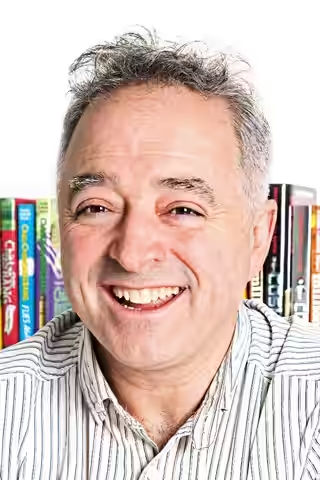
Frank Cottrell Boyce writes about ordinary, decent people doing patient work, whether a detective reopening a file or two boys deciding what to do with a bag of money. The scripts are warmer than they are daring, and the warmth is usually enough.
Fi1m perspective
A detective nobody has heard of asks to look again at a file that has been closed for thirteen years. Two boys find a bag of money and have to decide what it is for. A boy washed up on an island comes to understand that the place needs looking after. Frank Cottrell Boyce's people are rarely chosen for anything. They are the ones standing there when the thing happens, and his interest is in what they do next, which is usually slow, ordinary and decent.
He began in the soaps, Brookside and Coronation Street, in the 1980s and 1990s, then wrote six films with Michael Winterbottom from the mid-1990s, Butterfly Kiss to A Cock and Bull Story, with 24 Hour Party People (2002) the loud one in the middle. That was the restless phase. He dislikes the standard three-act shape and says so, and the Winterbottom films wander as though to make the point. Hilary and Jackie (1998), for Anand Tucker, was the first sign that real lives suited him. Then came Millions (2004), for Danny Boyle, which he turned into a novel, and after that the children's books took most of him. The screen work became occasional: The Railway Man (2013), Goodbye Christopher Robin (2017), two episodes of Doctor Who, the 2012 Olympic opening ceremony with Boyle again.
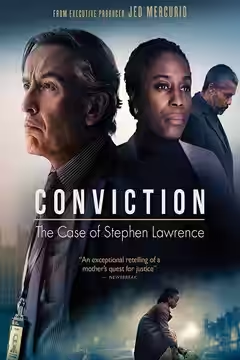
Stephen (2021), which he created and wrote with Joe Cottrell Boyce and Clive Driscoll, is the clearest case for him. It is not about the murder. It is three 45-minute episodes about a man asking for a file, reading it, and asking for the next one, directed by Alrick Riley with the same lack of fuss. We were moved by it more than paperwork has any right to manage, because the script trusts the dull work to be the story and Steve Coogan plays it without performing. The middle episode sags under the same paperwork, which is the risk of writing about patience: you end up asking for it.
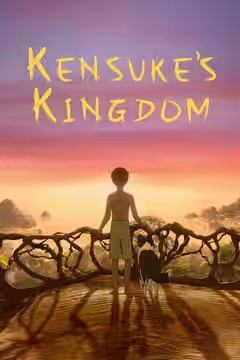
Kensuke's Kingdom (2024) shows the limit. The conservation message works because the island has been made worth caring for and the friendship is already in place, so the script does not have to argue. But it follows the Morpurgo novel closely and plays safe where Neil Boyle and Kirk Hendry's drawings are inventive, and the feeling in the film belongs mostly to the drawings. That is the honest reservation about him. He arranges real material so that a plain event carries its own weight; he does not often surprise you, and he does not seem to want to.
"I'm definitely a children's writer, that's what I want to be. I'm always trying to get rid of everything else," he said in 2012. The screen keeps getting in the way, and we are glad of it. Start with Stephen. If there are children on the sofa, Kensuke's Kingdom, and let the drawings do what the script is too polite to.
Biography
Frank Cottrell-Boyce is a British screenwriter and novelist. Born Francis G. Boyce on 23 September 1959 in Bootle, he studied English at Keble College, Oxford.
He has written screenplays for films including Welcome to Sarajevo (1997), 24 Hour Party People (2002), Code 46 (2003), Millions (2005) and Goodbye Christopher Robin (2017). He wrote episodes of the television series Doctor Who (2005) and devised the opening ceremony for the 2012 Summer Olympics with Danny Boyle. His children's novels include Millions, which won the Carnegie Medal in 2004.
Cottrell-Boyce was appointed Children's Laureate for 2024–2026. He has collaborated frequently with director Michael Winterbottom.