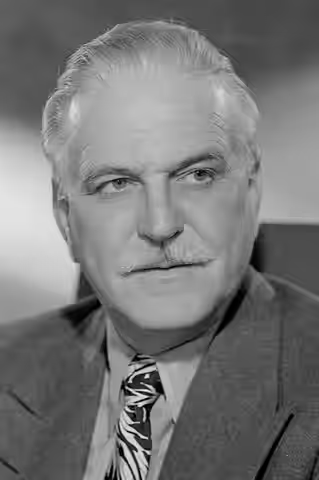
Frank Morgan made a speciality of men who hold an office and cannot quite hold themselves together: fluttering, courtly, wounded in their dignity and kind underneath it. He is the reason five strangers in Oz feel like one friend.
Fi1m perspective
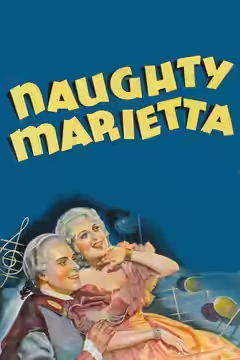
Frank Morgan's men are usually in charge of something and never quite in charge of themselves. The governor in Naughty Marietta (1935) has a province, a title and a wife, and Morgan plays him as a man whose dignity has been wounded so often it has developed a flinch. He flutters. He dithers. He begins a sentence with authority and finishes it looking for the door. It is a small part in a creaky film, and along with Elsa Lanchester's terrifying wife it is most of the reason to sit through the talking between the songs. We laughed at him, and then felt a little sorry for him, which is the order he intended.
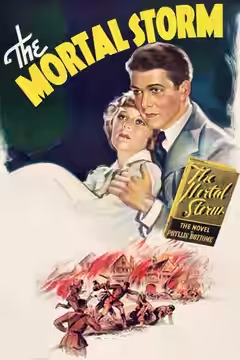
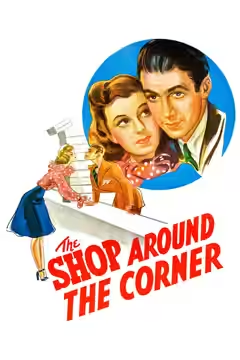
He was on stage from 1914 and in pictures from 1916, had his Broadway success in the 1920s, and from the mid-1930s was an MGM contract player, in supporting parts, through the 1940s until his death in 1949. The studio knew what it had bought: courtly, eccentric or befuddled middle-aged men, sympathetic almost by reflex. He is said to have been as good when the befuddlement was not funny, and the parts most often pointed to are Hugo Matuschek in The Shop Around the Corner (1940) and Professor Victor Roth in The Mortal Storm (1940). We will let them stand as names here; the dither, in those, is not the point.
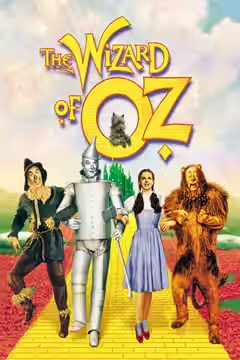
Then there is The Wizard of Oz (1939), in which he plays five people: Professor Marvel in Kansas, and then the Gatekeeper, the carriage driver, the Palace Guard and the Wizard himself. It is a stunt, and it does not play like one, because Morgan does not hide the join. The same fussing, apologetic warmth comes through under each disguise, so that everyone Dorothy meets at the end of the road seems faintly like someone she has met before. Some of the film's comic business goes on too long; his does not. He is never on screen for long, and the film is warmer for every minute he is.
The reservation about Morgan is the one that attaches to most character actors of his kind: he is remembered for one film, and the flutter is a thing he can switch on. In Naughty Marietta it is exactly what the scene requires. Across a career it could become a habit, the way a good comedian's pause can, and a lesser director would have let him lean on it. The five parts in Oz are the argument against this, because the trick there is not the disguises but the restraint: five men, one temperament, and no showing off about it.
He said once that "Frank Wuppermann, hobo, became Frank Morgan, thespian, overnight." Every man he played looks as though he arrived at his post the same way, and is waiting, politely, for someone to notice.
Biography
Frank Morgan (born Francis Phillip Wuppermann) was an American character actor. He made his Broadway debut in 1914 and his film debut two years later. He attended Cornell University and was a contract player at Metro-Goldwyn-Mayer for much of his career.
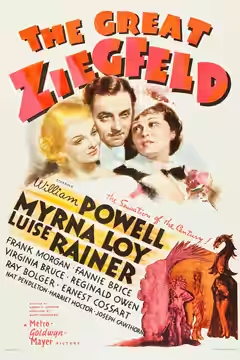
Morgan is known for his performances in The Wizard of Oz (1939) as Professor Marvel and the Wizard, The Shop Around the Corner (1940) as Hugo Matuschek, The Great Ziegfeld (1936), The Mortal Storm (1940) and The Three Musketeers (1948). His older brother Ralph Morgan was also an actor.