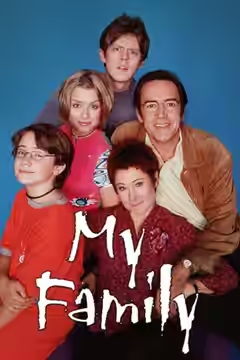
Fred Barron's gift is organisational rather than literary: he brought the American writers' room to the BBC and built a family sitcom that ran for eleven series. The scripts were workmanlike; the method, for better and worse, is what he leaves behind.
Fi1m perspective
Ben Harper wants his house to himself. He is a dentist with a wife who runs everything and three children who will not leave, and across eleven series and 110 episodes of My Family (2000) he never once gets what he wants. That is the engine, and it is the one Fred Barron fits to most of what he builds: a grumbler in the middle, a family or an office arranged to deny him peace, and a joke every few lines to keep it turning. He prefers to report on people rather than invent them, and the dentist came from his own life. You can see it in Ben's small, exact irritations. The plots are another matter.
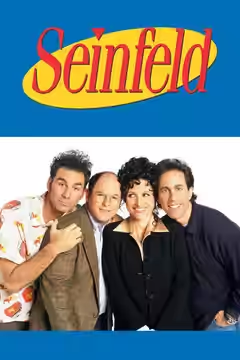
Barron began in journalism and wrote his first feature, Between the Lines (1977), about the alternative newspaper world he knew. "Maybe it's my background in journalism or perhaps it's just laziness, but I've always found it more interesting and a lot more fun to report on the world around me than to make stuff up." That instinct carried him through Kate & Allie, into executive producing on Seinfeld and The Larry Sanders Show (1992), and on to creating Dave's World and Caroline in the City (1995). We rate Larry Sanders about as highly as we rate anything, but his name is one among many on it, and we would not pretend to know which lines were his.
The turn came in 2000, when he moved to Britain and built My Family for the BBC the American way: a room of writers passing scripts along a table, Ian Brown and James Hendrie among them, Dewi Humphreys directing, Sophie Clarke-Jervoise commissioning. He kept the teams smaller than in Los Angeles and liked that the BBC gave fewer notes. The result is the longest-running British sitcom of its decade, and it is also exactly what it sounds like. Scenes are competent and interchangeable. By the later series even the cast were saying in public that some of the scripts were not good enough. We laughed more than we expected to, and nearly all of it was Robert Lindsay and Zoë Wanamaker finding a tone in lines that did not contain one; an hour afterwards we could not have told you a single plot.
He did it again with According to Bex (2005) and After You've Gone (2007), tailoring material once the actors were cast, and then went in-house at the BBC to develop more team-written comedy. We have not reviewed those and will not judge them here. What we can say is that Barron's lasting mark on British television is the method. He proved a sitcom here could run for a decade on an American table, and the people who sat through series ten are entitled to their own view of whether that was a gift.
Biography
Fred Barron is an American television writer and producer. He wrote the screenplay for the 1977 film Between the Lines and began writing for television with episodes of Kate & Allie (1984) and Just in Time (1988).
Barron created or co-created several series, including Dave's World (1993–1997), Caroline in the City (1995–1999), My Family (2000–2011) and After You've Gone (2007). He wrote one episode of The Larry Sanders Show (1992) and served as executive producer on three episodes. He also worked as executive producer on four episodes of Seinfeld (1990).
His credits include writing for Sessions (1991) and later documentaries such as Bill Traylor: Chasing Ghosts (2019). Barron has received a Primetime Emmy nomination and other awards including a CableACE Award and a TV Quick Award.