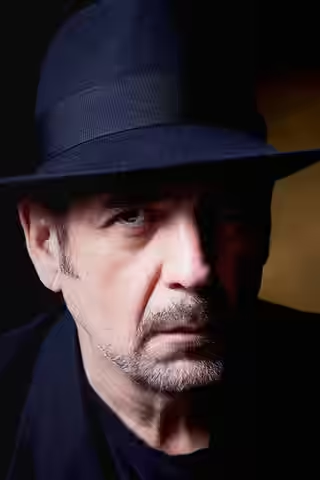
Gabriel Beristain gives action a readable setting and knows when to move close enough to see the effort. We value that practical judgement, though his tidy finish can leave a place without much character.
Fi1m perspective
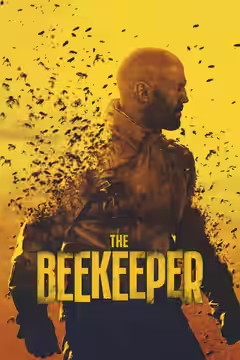
In The Beekeeper (2024), the call centre glows pink and purple while young people in headsets cheer the money coming in. Gabriel Beristain lights Ben Munro’s set like a nightclub, making the fraud look like a staff celebration. It is a pointed choice for David Ayer’s otherwise blunt revenge thriller. We like the precision, even in a film whose repeated explanations of its own metaphor wear us down.
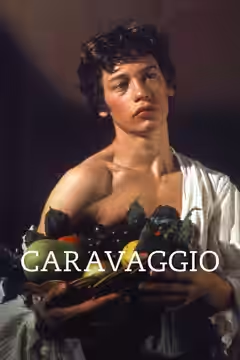
His first feature as cinematographer was Carne de tu carne (1983), a Colombian horror film; Caravaggio (1986) followed. Blade II (2002), with director Guillermo del Toro, brought him into larger-scale studio horror and action. Years of additional photography for Marvel films followed, beginning with Iron Man (2008). Black Widow (2021) was his first full feature as cinematographer for that franchise.
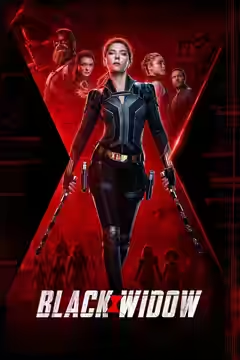
In Cate Shortland’s Black Widow, he is most effective in the Budapest flat, where the sisters fight among curtains, a sink and a hob. He shoots hand-held and close enough for their tiredness to register; Charles Wood’s domestic setting gives the action something solid to push against. We were caught off guard and moved when Yelena said their childhood had been real to her, because Florence Pugh made it sound like an accusation rather than a plea. Beristain’s closeness allows the physical effort to matter before the conversation does. Elsewhere, the grey Norwegian light and orange suburban prologue are competent rather than distinctive.
The limits are clearer in Hawaii Five-0 (2010), where Beristain shares cinematography duties with Michael Martinez. Their bright finish makes the scenery inviting and the action easy to read. Production designers Gary Frutkoff and Keith Neely help supply that clean look, but little of it suggests a community beyond the needs of the police story. The bikini shots make the setting feel advertised, which is a modest ambition for so much scenery.
For a useful introduction, try Black Widow for the Budapest flat and the family scenes. Be prepared for a final half-hour dominated by digital debris. The people were doing perfectly well without it.
Biography
Gabriel Beristain is a Mexican cinematographer. Born in Mexico City in 1955, he is the son of actor Luis Beristain. He studied at the Instituto Politécnico Nacional and the National Film and Television School in the United Kingdom.
His first feature as cinematographer was the 1983 Colombian film Carne de tu carne (Bloody Flesh), for which he received the Best Cinematography Award at the Bogotá Film Festival. Subsequent credits include Derek Jarman's Caravaggio (1986), Taylor Hackford's Blood In Blood Out (1993) and Dolores Claiborne (1995), and David Ayer's The Beekeeper (2024). He has worked extensively with Marvel Studios on films including Blade II (2002), the Iron Man trilogy and Black Widow (2021), as well as television series such as Agent Carter and Hawkeye.
Beristain is a member of the American Society of Cinematographers, the British Society of Cinematographers and the Mexican Society of Cinematographers. He is also a member of the Academy of Motion Picture Arts and Sciences and the British Academy of Film and Television Arts.