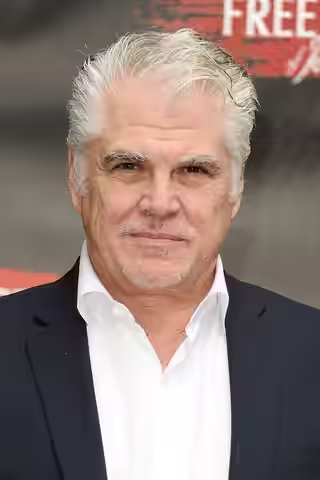
Gary Ross writes warm, decent, well-carpentered films about Americans finding their nerve, and directs them with a care that sometimes stops them moving. The screenplays are the real work; the best of them, Big, someone else directed.
Fi1m perspective
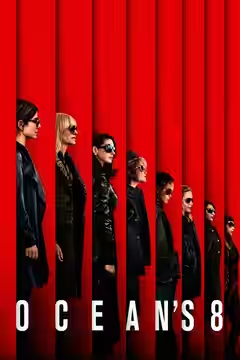
Debbie Ocean walks out of prison at the start of Ocean's Eight (2018) with a plan already in her head, and the film follows her through the recruiting, the rehearsal and the night itself in the order you would expect. Nothing is out of place. The people are likeable, the heist is neatly built, and the camera stands at a respectful distance while the cast enjoy themselves. That is the Gary Ross habit. We thought a caper could not afford to be careful, and careful is what he is.
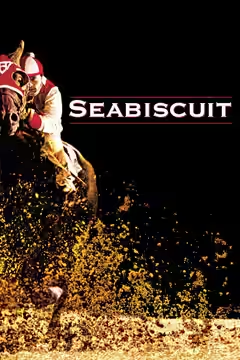
He began as a writer, and it is as a writer that he has done his best work. Big (1988), written with Anne Spielberg, gave Penny Marshall and Tom Hanks a premise that could have been a sketch and made it a whole film. Dave (1993), a political comedy in the Capra line, followed. Then he started directing his own scripts: Pleasantville (1998), in which a black-and-white town turns to colour as its people begin to break the rules; Seabiscuit (2003), from a non-fiction book; The Hunger Games (2012), written with the novelist Suzanne Collins; Free State of Jones (2016); and Ocean's Eight, written with Olivia Milch.
A Ross screenplay rests on a decent idea, decently worked out. He likes a technical conceit that carries a moral, the colour in Pleasantville above all, and he likes an underdog with a country's hopes on its back. He prefers to shoot things for real where he can. What he is less sure of is pace. The consensus on The Hunger Games was that the handheld camera and quick cutting made it hard to tell where anyone was; Free State of Jones was widely found long, its story spread across several eras without much shape. In Ocean's Eight he went the other way and stood still. Soderbergh's Ocean's Eleven (2001) got away with low stakes because it moved. Ross's does not move, and the low stakes show.
Big is still the one we would hand to a stranger. Hanks plays a man who does not know how adults are supposed to behave and gets the uncertainty exactly right, and we were more moved than we expected to be. Then we were slightly cross, because the script is so sure that childhood has the better of the argument that it never lets a grown-up make a case. That is the Ross weakness in its earliest form: the warmth is real, and it is not to be argued with.
So the pattern is a writer of sound construction and real kindness who, handed the whole film, tends to hold it too gently. Marshall knew what to do with his best script, and it shows. If you have not seen Big, see it. If you have, Pleasantville is the one of his own that critics return to most, and its conceit is the kind of idea he has always been best at.
Biography
Gary Ross is an American screenwriter, director and producer. Born on 3 November 1956 in Los Angeles, California, he is the son of screenwriter Arthur A. Ross. He attended the University of Pennsylvania but did not graduate. After writing a novel and working on political campaigns, Ross co-wrote his first produced screenplay, Big (1988), with Anne Spielberg.
Ross wrote the screenplays for Dave (1993), Lassie (1994) and Mr. Baseball (1992). He made his directorial debut with Pleasantville (1998), which he also wrote and produced. He later directed and wrote Seabiscuit (2003), The Hunger Games (2012) and Ocean's Eight (2018), and wrote and directed Free State of Jones (2016). He has received four Academy Award nominations.