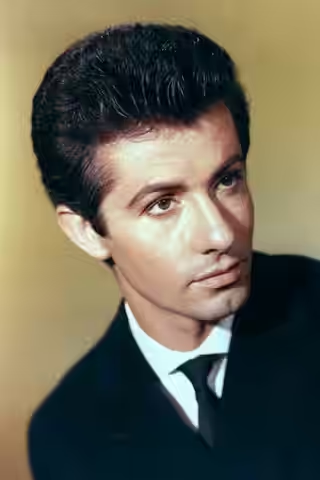
George Chakiris is at his most persuasive when he dances, giving an argument physical force without interrupting the pleasure of the number. We would return to his musical ensembles before his dramatic leading roles.
Fi1m perspective
On the rooftop in West Side Story (1961), George Chakiris’s Bernardo argues against New York while Rita Moreno’s Anita argues for it. America gives him an opponent who can answer with her whole body, and he belongs in that contest. We were delighted by the way their disagreement kept the dancing lively rather than stopping it for a speech. Moreno is the film’s strongest performer, but Chakiris gives her someone worth arguing with.
Jerome Robbins and Robert Wise make good use of an actor whose dancing can carry the scene. At the gym, Thomas Stanford’s cutting quickens as the gangs perform at each other, making their rivalry legible before anyone needs to explain it. Chakiris fits this kind of ensemble filmmaking, where the way someone moves among other people tells us who they are. The weakness is elsewhere: the film goes slack when the dancing stops, and the central lovers are less compelling than the people around them.
The chorus work in Gentlemen Prefer Blondes (1953) and White Christmas (1954) came before Riff in the 1958 London stage production of West Side Story. Moving from Riff to Bernardo gave him another way into material he already knew. Leading roles followed in Kings of the Sun (1963) and The High Bright Sun (1965), without establishing him as a lasting film lead. Reservations about the limited variety of his dramatic acting help explain why we would start with the musicals. From the 1970s, television character parts became his main work.
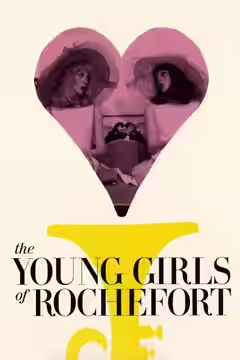
Jacques Demy’s The Young Girls of Rochefort (1967) is the other useful place to look, with Chakiris as Etienne alongside Gene Kelly, Catherine Deneuve and Françoise Dorléac. We value the film for its warmth and space, and for Michel Legrand’s songs, which make romantic hopes feel urgent. It does not need every performer to dominate, and Chakiris’s ease in musical company suits it. Some of the dancing is merely pleasant, but the colour and music make the slack passages easy to forgive. Start with West Side Story for the sharper impression of what he can do, then try Demy for an evening in less combative company.
Biography
George Chakiris is an American actor and dancer. He was born on 16 September 1932 in Norwood, Ohio.
He is best known for his role as Bernardo in the 1961 film West Side Story, for which he received the Academy Award for Best Supporting Actor and the Golden Globe Award for Best Supporting Actor – Motion Picture. Earlier in his career he appeared uncredited as a dancer in films including Gentlemen Prefer Blondes (1953), White Christmas (1954) and Brigadoon (1954). He had played Riff in the London stage production of West Side Story before being cast in the film.
Chakiris had subsequent roles in films such as The Young Girls of Rochefort (1967) and guest appearances in television series including Hawaii Five-O (1969), CHiPs (1977) and Dallas. He returned to acting for the film Not to Forget (2021).