We admire Gerald Perry Finnerman's care with faces and his way of keeping television dialogue visually lively. His work on Moonlighting is particularly rewarding: the photography attends to the actors even when the programme gets distracted by its own cleverness.
Fi1m perspective
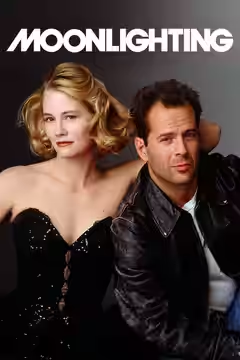
In Moonlighting (1985), the face listening to a line can be as interesting as the person delivering it. Cybill Shepherd and Bruce Willis quarrel, and the photography makes their unspoken replies worth watching. We took particular pleasure in those reactions, because they made the quarrels feel like exchanges between two people rather than a competition for the next joke. The cinematography is credited to Finnerman and Howard Block; its attention to the actors is one reason we recommend a programme that sometimes congratulates itself too readily.
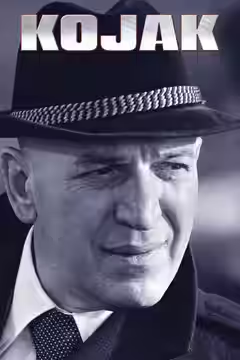
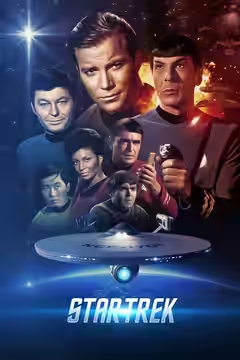
Before that, he had worked as Harry Stradling's camera operator on My Fair Lady (1964). On Star Trek (1966), he was the principal cinematographer for the first two series and part of the third, using coloured gels and changing background light to vary the look of a single set. Work on Kojak (1973) followed, before the moving camera and fast dialogue of Moonlighting brought a different set of demands. There, carefully arranged cross-lighting helped keep those conversations lively.
Finnerman's interest in faces also connects him to Stradling, whose butterfly and high-key lighting techniques informed his treatment of female leads. On Moonlighting, he used split diffusion alongside prime lenses and camera movement, taking care over the individual portrait without giving up the pace of a conversation. That care matters in a detective comedy whose main attraction is the pair doing the arguing. James J. Agazzi's production design gives the detective setting credibility even when the comedy becomes fanciful, and the photography supplies a comparable steadiness.
There is a limit to what such care can do for Moonlighting when the jokes become insistent. Giving a performer a well-lit face cannot make every piece of self-indulgence worth sitting through. Still, the photography keeps attending to the actors rather than competing with them, which is a considerable virtue in this company. Start there for Finnerman, and pay as much attention to the person receiving the line as to the one speaking it.
Biography
Gerald Perry Finnerman, also credited as Jerry Finnerman, was an American cinematographer. The son of cinematographer Perry Finnerman, he began his career as an apprentice to his father and as a camera operator for his godfather, Harry Stradling. He attended Hollywood High School and Loyola Marymount University.
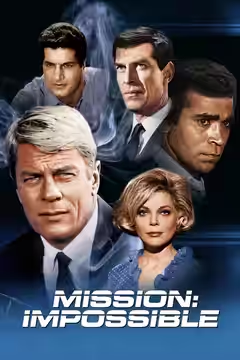
Finnerman served as director of photography on the original Star Trek series from 1966 to 1968, and subsequently on Mission: Impossible. His later television credits include Kojak (1973) and Moonlighting (1985). He won a Primetime Emmy Award for the 1978 television film Ziegfeld: The Man and His Women, and received further Emmy nominations for his work on other series. In 1996 he became the first director of photography inducted into the Producers Guild of America Hall of Fame for his contribution to Star Trek.