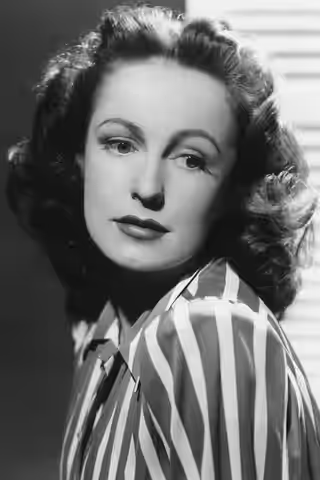
Geraldine Fitzgerald played strong-willed, sympathetic women in supporting parts, and did much of the work with her face. Warner Bros signed her off a Broadway stage, gave her two good roles in 1939 and clashed with her over the rest until the film career ran down.
Fi1m perspective
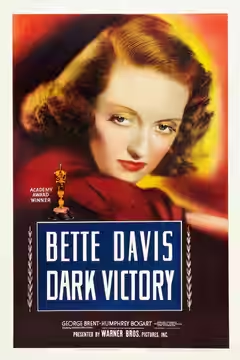
In Dark Victory (1939) Ann King stands in a hospital corridor while the doctors talk about her friend, and Geraldine Fitzgerald plays her as someone rehearsing bad news. Nobody has told her anything. She has worked it out, and she is deciding how much of it Judith needs to hear. Bette Davis is a few rooms away refusing to be pitied, and Fitzgerald's job is to know more than her and say less, which she does almost entirely with her face. It was her first American film, and the part she was handed, in one form or another, for the rest of her working life.
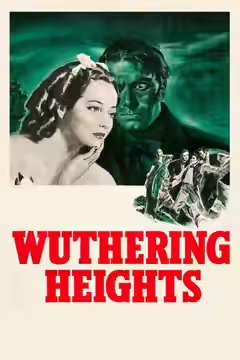
She had come a long way round to it. She started at the Gate Theatre in Dublin in 1932, made British films from 1934 to 1937, and went to New York in 1938 to make her Broadway debut with Orson Welles's Mercury Theatre in Heartbreak House. A Warner Bros scout saw that production and signed her, and in 1939 she made Dark Victory and, for William Wyler, Wuthering Heights. Isabella Linton is the one person on that moor who says what she wants and pays for it, and Fitzgerald plays the wanting with a clarity nobody else in the film manages, Merle Oberon included. We felt for Isabella more than the film asks us to, because Fitzgerald refuses to make her foolish; she is simply a woman who has chosen badly and knows it. What happens to her belongs to the second half.
Then the studio and the actor fell out. She argued with Warner Bros over the parts she was given and over wanting to go back to the stage, the studio suspended her, and by the end of the 1940s the screen career had more or less stopped. Three Strangers (1946), with Sydney Greenstreet and Peter Lorre, is the title from that decade we would most like to review. She said later, "I am proud of my rebellious moments. But I wish I'd handled them with more wit," which is about as fair a verdict as anyone has offered.
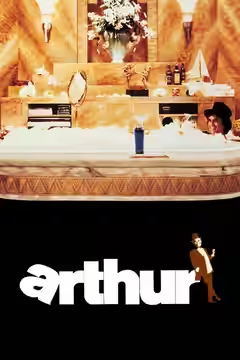
The stage took her back. She returned to New York in the 1950s and had her largest successes from 1971 onward, Long Day's Journey Into Night among them, and she directed as well as acted. On screen she became the older woman in the corner of other people's films: The Pawnbroker (1965), Harry and Tonto (1974), Arthur (1981) as Martha Bach. The voice, low and Irish, had not changed, and neither had the habit of watching the lead and letting us see what she thought.
We have only the two 1939 films to send you to, and they are the right two. Watch Dark Victory first, then Wuthering Heights, and keep an eye on whoever is standing slightly behind the star.
Biography
Geraldine Fitzgerald (1913–2005) was an Irish-American actress. She made her stage debut at Dublin's Gate Theatre and appeared in several British films in the mid-1930s before moving to New York.
She made her Broadway debut in the Mercury Theatre production of Heartbreak House (1938). Her Hollywood career began with the role of Isabella Linton in Wuthering Heights (1939), for which she received an Academy Award nomination for Best Supporting Actress; she also appeared that year in Dark Victory. Later film roles included The Pawnbroker (1965), Harry and Tonto (1974) and Arthur (1981). She received a Daytime Emmy Award and was inducted into the American Theatre Hall of Fame and the Hollywood Walk of Fame. She also directed for the stage.