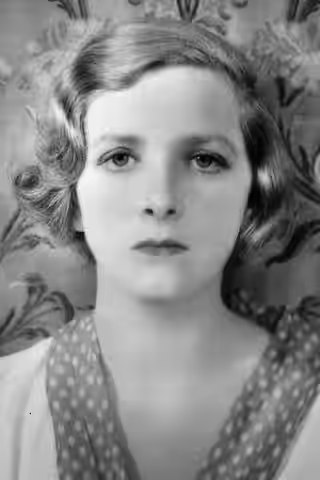
Gladys Cooper made good manners frightening. Hollywood took her on in 1940 and gave her mothers, nuns and dowagers who never raised their voices and never needed to, and the best of those small parts are the reason to watch several of the films around them.
Fi1m perspective
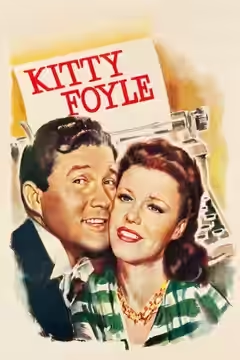
In Kitty Foyle (1940) she asks Ginger Rogers to sit down and it sounds like a sentence being passed. Nothing in the voice changes. The courtesy is complete, and the completeness is what does the damage. Cooper never plays the usual signs of a villain, the narrowed eye or the sharpened consonant; she plays a woman who has never once had to be rude, because everyone has always agreed with her before she finished speaking. That is the habit, and it lasted thirty years.
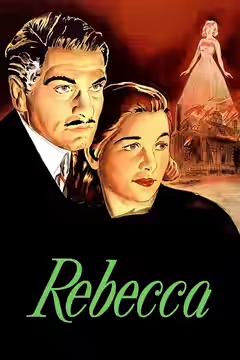
She had been on the stage since 1905 and a Gaiety Girl from 1907, and she had spent a long career in London before any camera saw her: The Importance of Being Earnest in 1911, The Second Mrs Tanqueray in 1922, and the management of the Playhouse Theatre from 1917 until 1934. Early on some found her stiff, and Home and Beauty (1919) took that criticism. She went to the American stage in 1934 with The Shining Hour and to Hollywood in 1940, past fifty, at an age when most actresses are being quietly retired. Her first major Hollywood part was Beatrice Lacy, Maxim de Winter's sister in Hitchcock's Rebecca (1940), a role small enough that our own review found other things to look at.
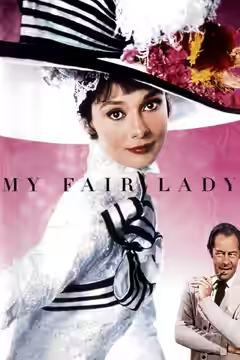
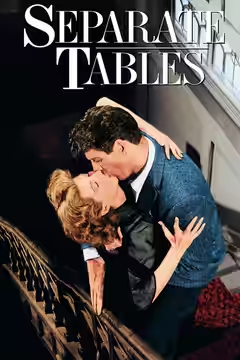
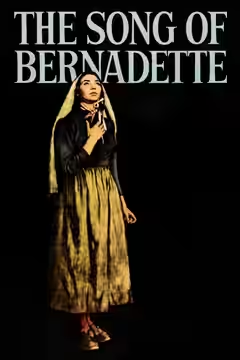
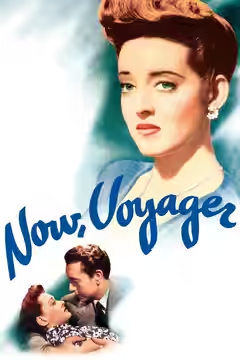
Hollywood knew what it had. Mrs Vale, Bette Davis's mother in Now, Voyager (1942); Sister Marie Therese in The Song of Bernadette (1943), the nun who does not believe; Mrs Railton-Bell in Separate Tables (1958); Mrs Higgins in My Fair Lady (1964). Different rooms, one instrument. What she supplied was authority held very still, and disapproval as a kind of good breeding. In Kitty Foyle, when the Straffords make clear what they intend to do about Kitty, we found ourselves sitting straighter on the sofa, as if the verdict were ours, and the reason is that Cooper never looks at Rogers as an enemy. She looks at her as a matter to be settled, and that is far colder.
The limit is real. Between 1940 and her death in 1971 the parts were mostly the same dowager, and the films varied more than she was allowed to. She said herself that "Familiarity breeds [theatrical] trickery but variety constantly calls for fresh effort and breeds versatility," and Hollywood, having heard this, kept her familiar. That she avoided the trickery anyway is the achievement.
Start with Kitty Foyle, for the invitation to sit down, and forgive the film its men. Then Now, Voyager, which we have not reviewed but which the whole of her Hollywood reputation rests on. Watch for the moment she is polite. It is always the moment somebody loses.
Biography
Dame Gladys Cooper was an English actress whose career on stage, in films and on television spanned seven decades. She began as a teenager in Edwardian musical comedy and pantomime, later starring in dramatic roles and managing the Playhouse Theatre in London from 1917 to 1934.
Cooper appeared steadily in West End and Broadway productions during the 1930s. She moved to Hollywood in 1940 and found success in character roles, receiving Academy Award nominations for Best Supporting Actress for Now, Voyager (1942), The Song of Bernadette (1943) and My Fair Lady (1964). She continued working on stage and screen until her death.